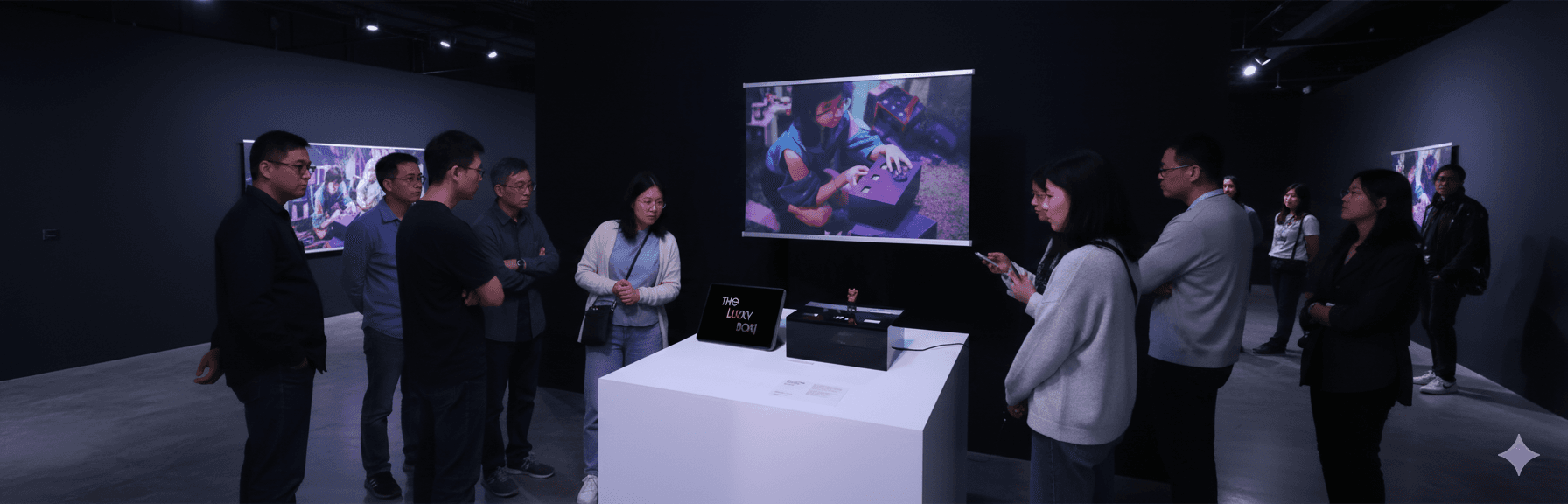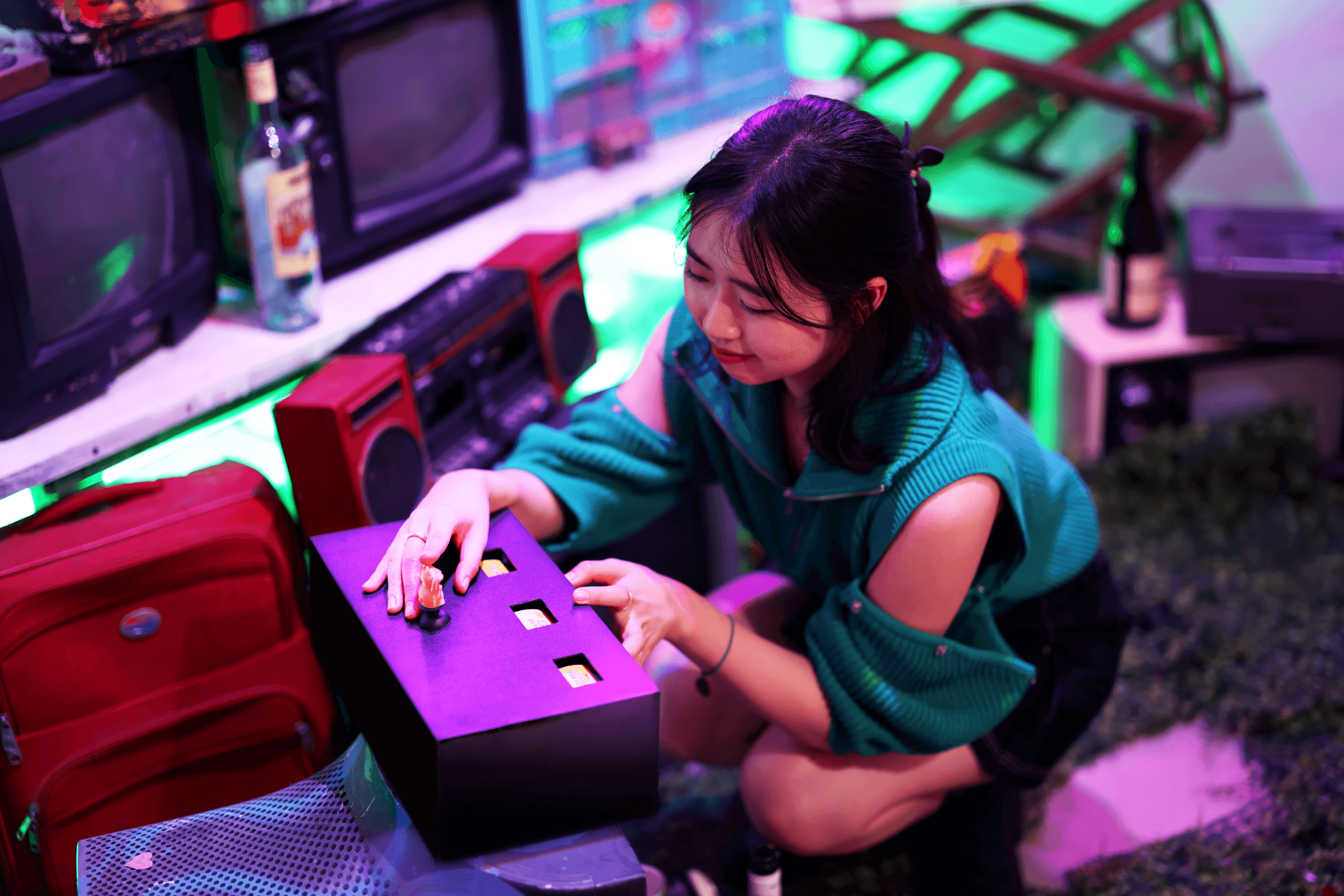
A Guaranteed-Win Lucky Slot Machine
The Lucky Box is a guaranteed-win slot machine that reframes luck as a conscious choice rather than random chance. Using a familiar mechanical interface, the project explores how intention can be transformed into action through ritualized physical interaction. By turning abstract belief into a tangible experience, the object examines how embodied micro-interactions can influence mindset, agency, and everyday decision-making.
I focused on designing embodied interactions that shape user mindset through physical input and tactile feedback. This included exploring the psychology of serendipity to define behavioral hypotheses, engineering a physical computing system that delivers consistent sensory responses, and crafting an interaction flow that supports a positive, reflective emotional state.
MY ROLE
Physical Interaction Designer
Skills
Concept Development
Tangible Interaction Design
Physical Computing (Arduino)
3D Modeling & Fabrication
Team
Personal Project
Timeline
March 2023 - June 2023
01 | overview
Key highlights
Perceptions of luck are often shaped by the belief that it is random or reserved for a few, which can lead to passivity in everyday decision-making. When ideas like hope and opportunity feel distant or intangible, it becomes harder to recognize how intention and preparation influence outcomes.
The Lucky Box translates this psychology into an interactive experience by turning “hope” into a physical ritual. By inviting users to actively pull for an opportunity, the object reframes luck as a conscious choice—shifting the experience from passive waiting to deliberate action and confidence.
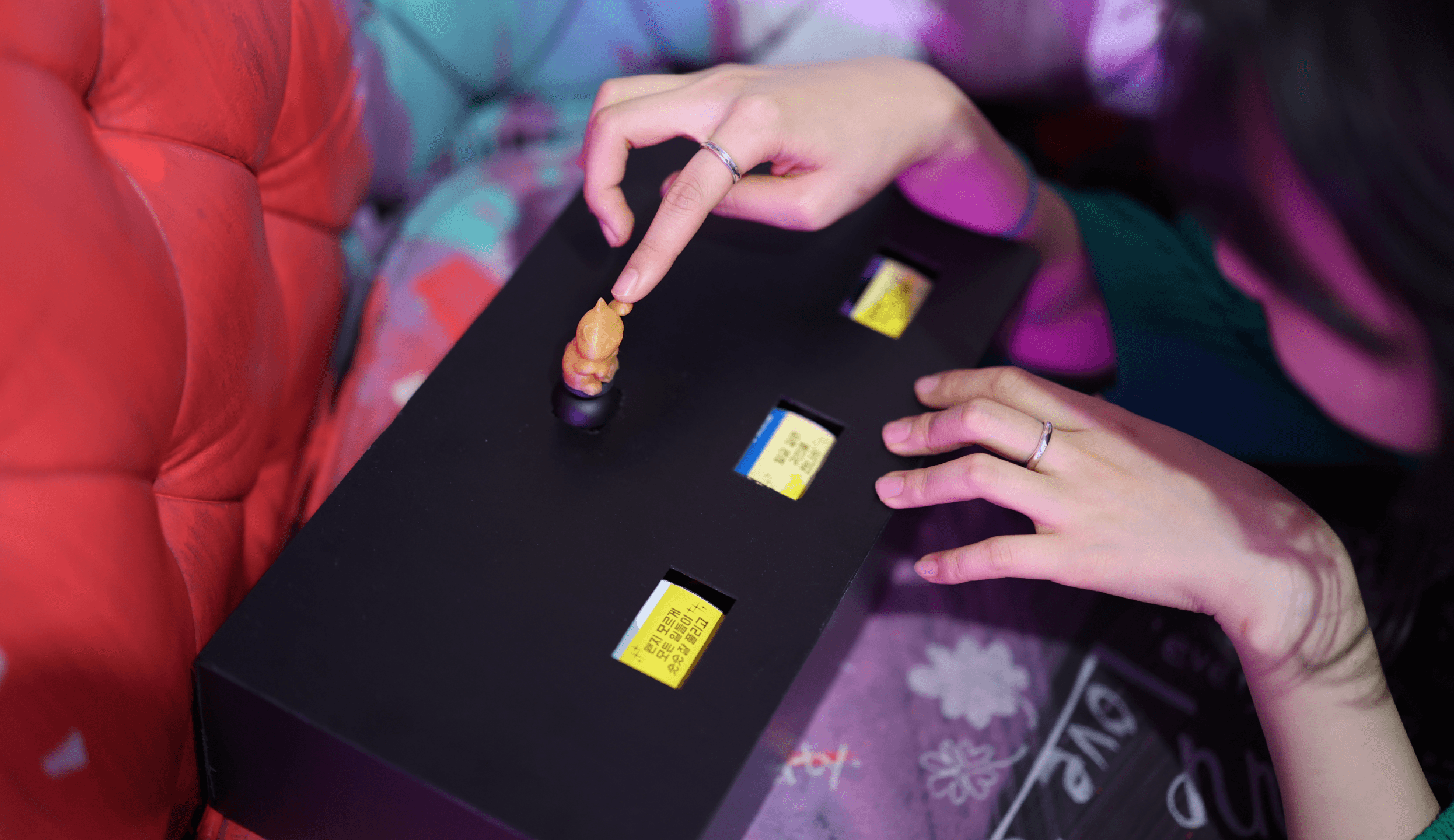
No risk, Just reward
Luck Psychology
From superstition to probability, The Lucky Box explores why people believe luck can be “triggered.” By turning belief into a physical experience, the project reframes luck as a designed moment—felt immediately and remembered longer.
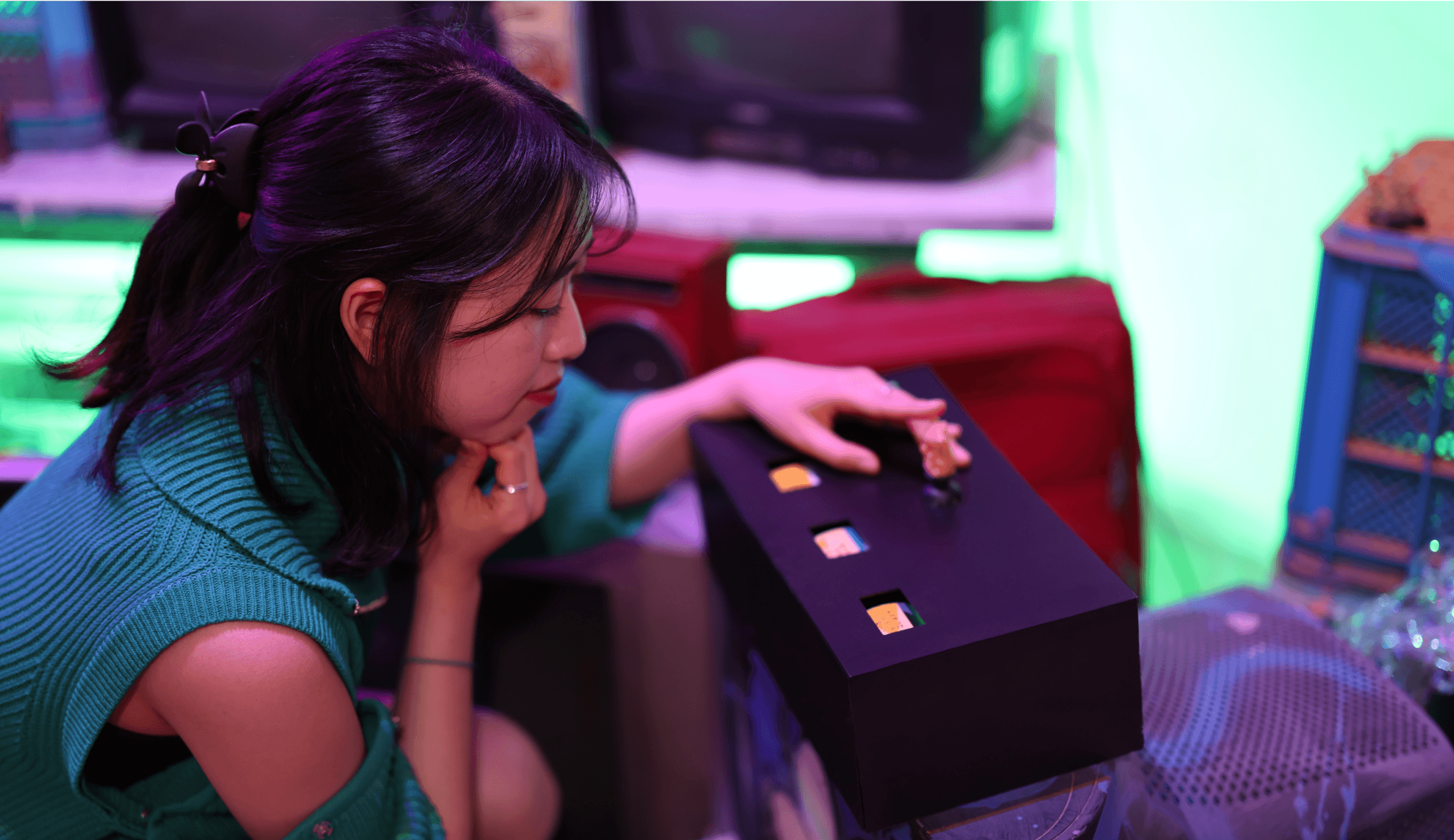
Make it physical
Physical Interaction
Not a screen—an object you touch, pull, and commit to. One simple action turns anticipation into payoff in a continuous flow, making the “luck moment” tangible.
Lose the fear of failure
Arduino-Driven System
Powered by Arduino-based sensing and control, the box detects the user’s input and triggers a predictable outcome. The system stays intentionally minimal—so the experience feels magical, not technical.
02 | concept
background
“Have you ever felt luck is only given to the chosen?”
When outcomes feel uncontrollable, people often turn to symbols, rituals, and everyday “luck” practices—not because they are irrational, but because they help restore a sense of agency under uncertainty.
Through research, I identified two key threads: the psychological mechanisms that make luck feel real, and the cultural forms that make luck visible. Together, these insights informed the creation of The Lucky Box—a tangible, interactive ritual that turns abstract hope into a physical action users can trigger and hold.
Mechanisms of luck
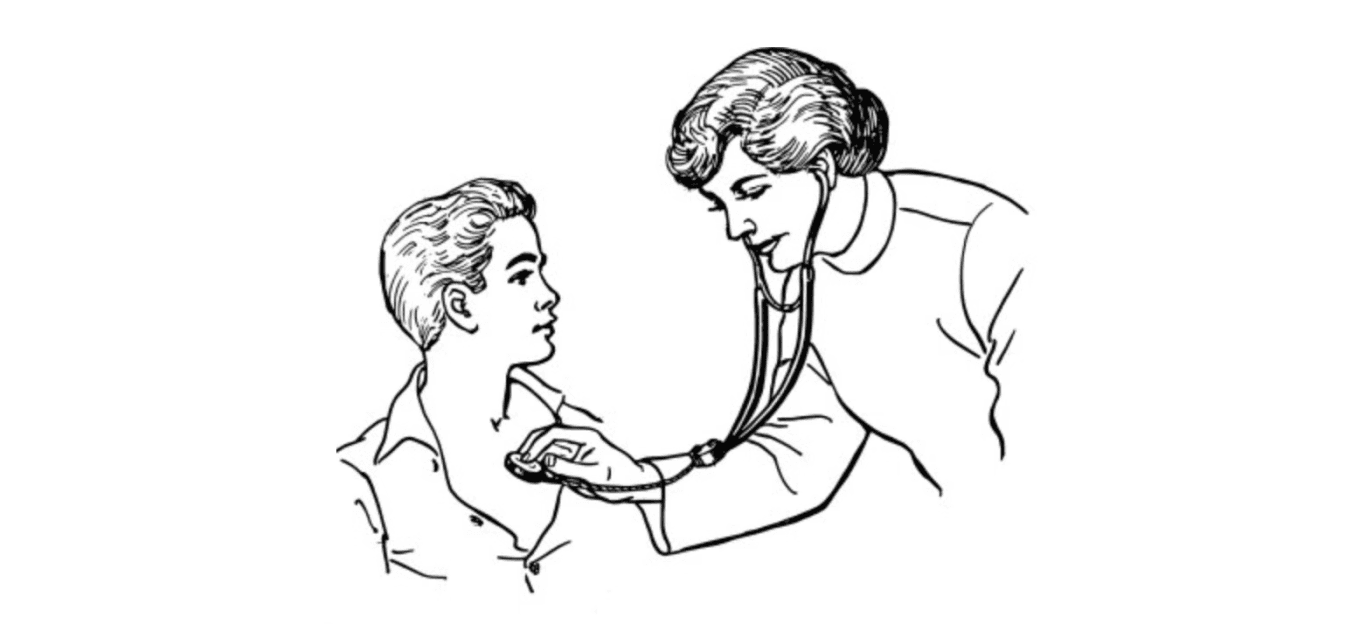
Luck isn’t random—it’s constructed through how people interpret experiences and take action. Based on behavioral research, I focused on three mechanisms that help make uncertainty feel manageable: self-deception, self-efficacy, and ritual.
*Hover to see more details.



cultural expressions of luck
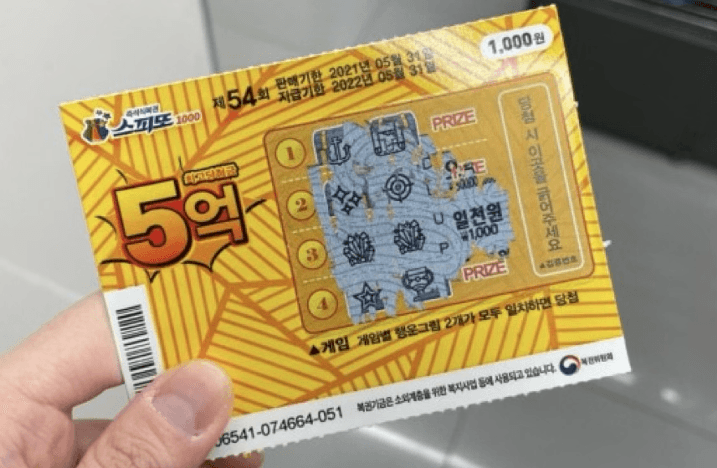
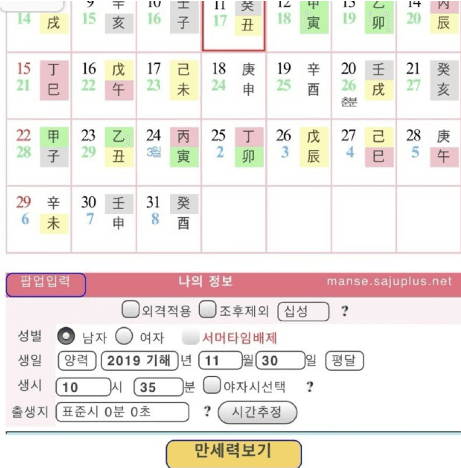
These psychological drivers surface in everyday culture as small, repeatable objects and habits. From clovers and lottery tickets to saju and horoscopes, people externalize uncertainty into rituals they can carry, repeat, and trust.
*Hover to see more details.





Ideation
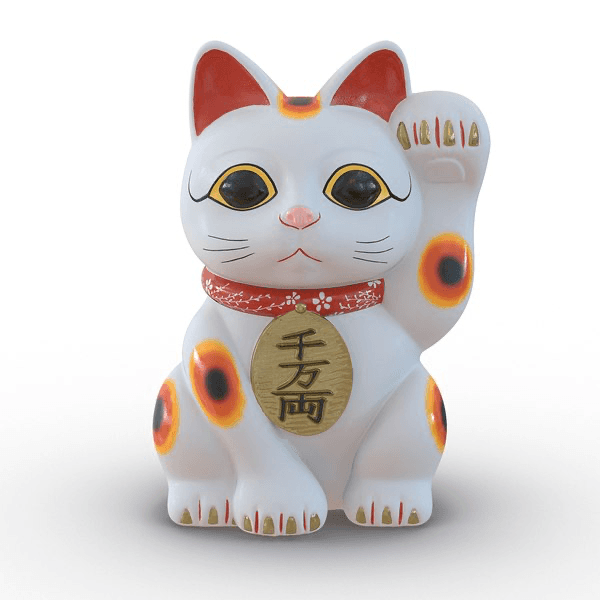
I began by exploring familiar expressions of luck such as a rigged lottery ticket, a fortune-telling site that only predicts success, and a slot-machine concept. While these ideas were playful, the core experience still felt incomplete.
On a screen, luck felt flat. The emotional weight came from physical resistance, including the friction of scratching a card, the force of pulling a lever, and the moment your body commits before the outcome appears.
That insight shifted the direction. I kept the slot machine’s iconic interaction but introduced one rule where the experience had to be physical and the win had to be real.
…A slot machine that wins 100% of the time?
Synthesizing these psychological needs with their cultural expressions, I defined the core design challenge:
💭 How might we materialize abstract beliefs like hope into tangible, interactive rituals that empower everyday decision-making?
03 | development
Interaction Mechanism
overall project direction
With the core interaction defined, I moved from conceptual exploration into physically developing Lucky Box—testing how gesture input, mechanical motion, and material structure could be realized in a functioning object.
Box Design Development
Motor Control Development
System Testing & Iteration
Box design development
With the core hardware components defined, I focused on developing the Lucky Box enclosure to transition the interaction concept into a physical system. I translated the slot machine’s iconic pull into core components—lever input, rotational reels, and internal control logic—mapping how a single gesture could trigger a consistent outcome while still reading as unpredictable.
Through iterative sketching, I explored reel configurations, motor placement, and mounting strategies, which revealed practical constraints around motor speed, stability, and enclosure depth. These explorations surfaced a key design challenge: how to conceal mechanical certainty behind the appearance of randomness without introducing unnecessary complexity.
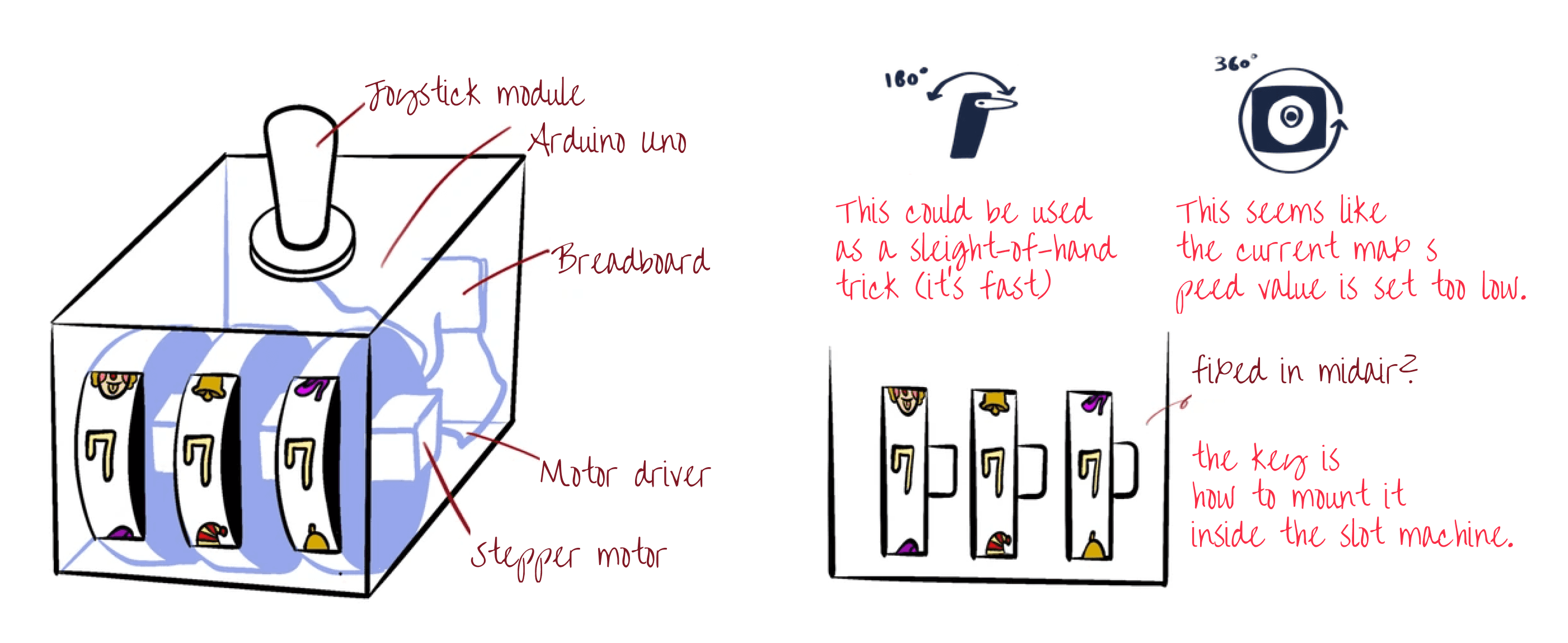
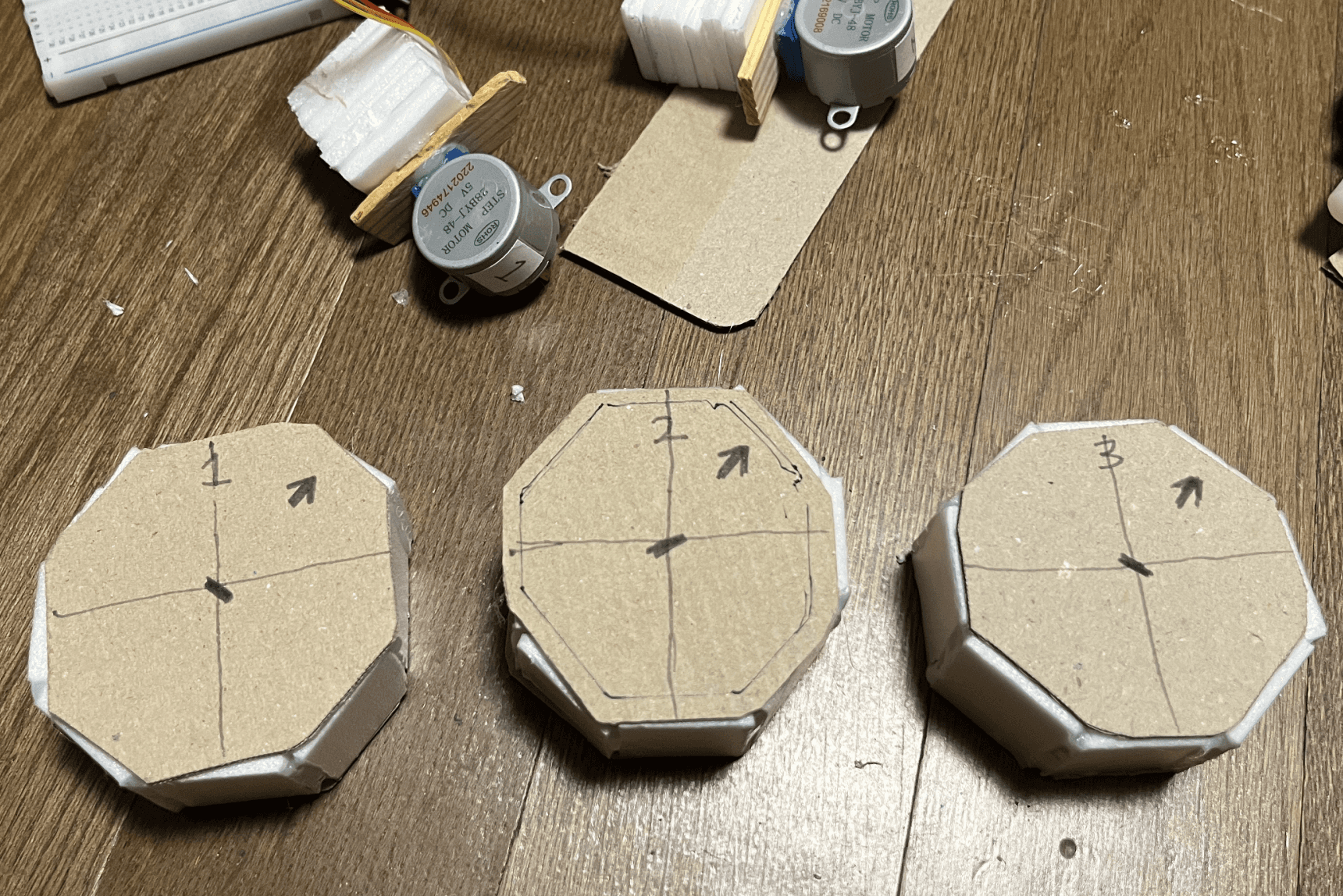
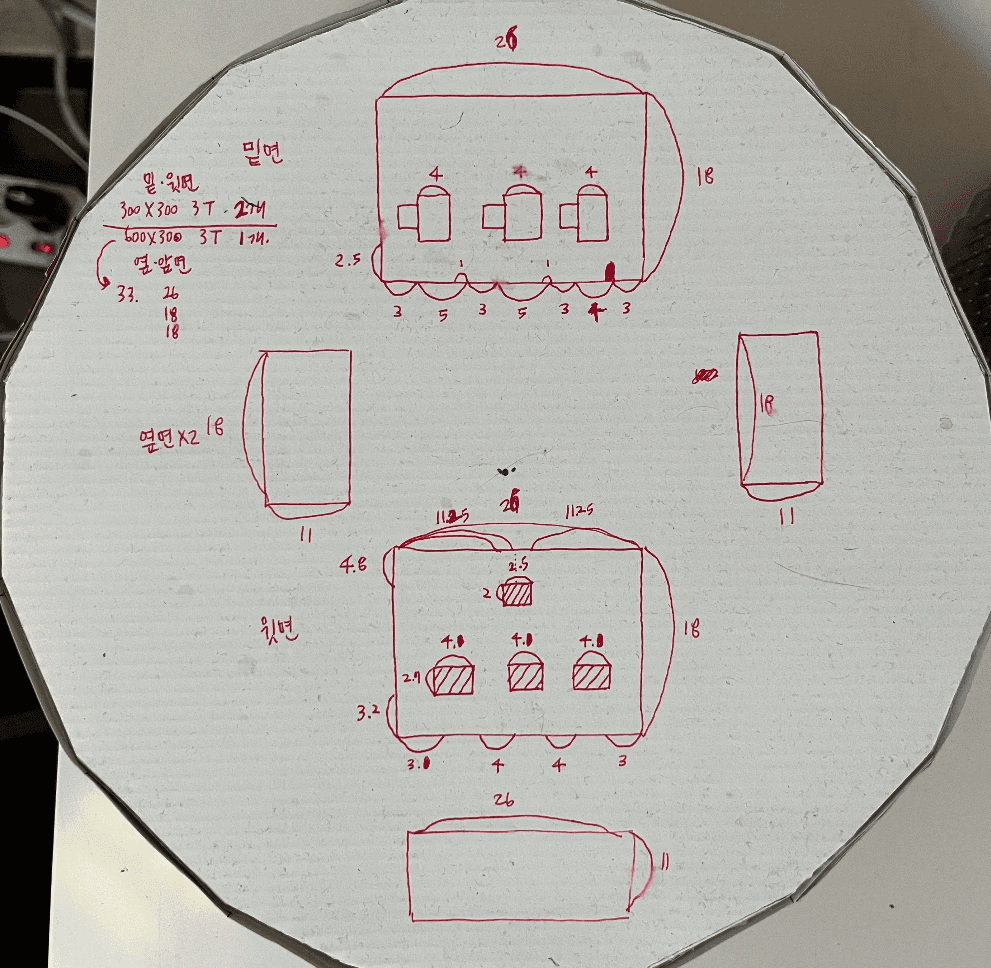
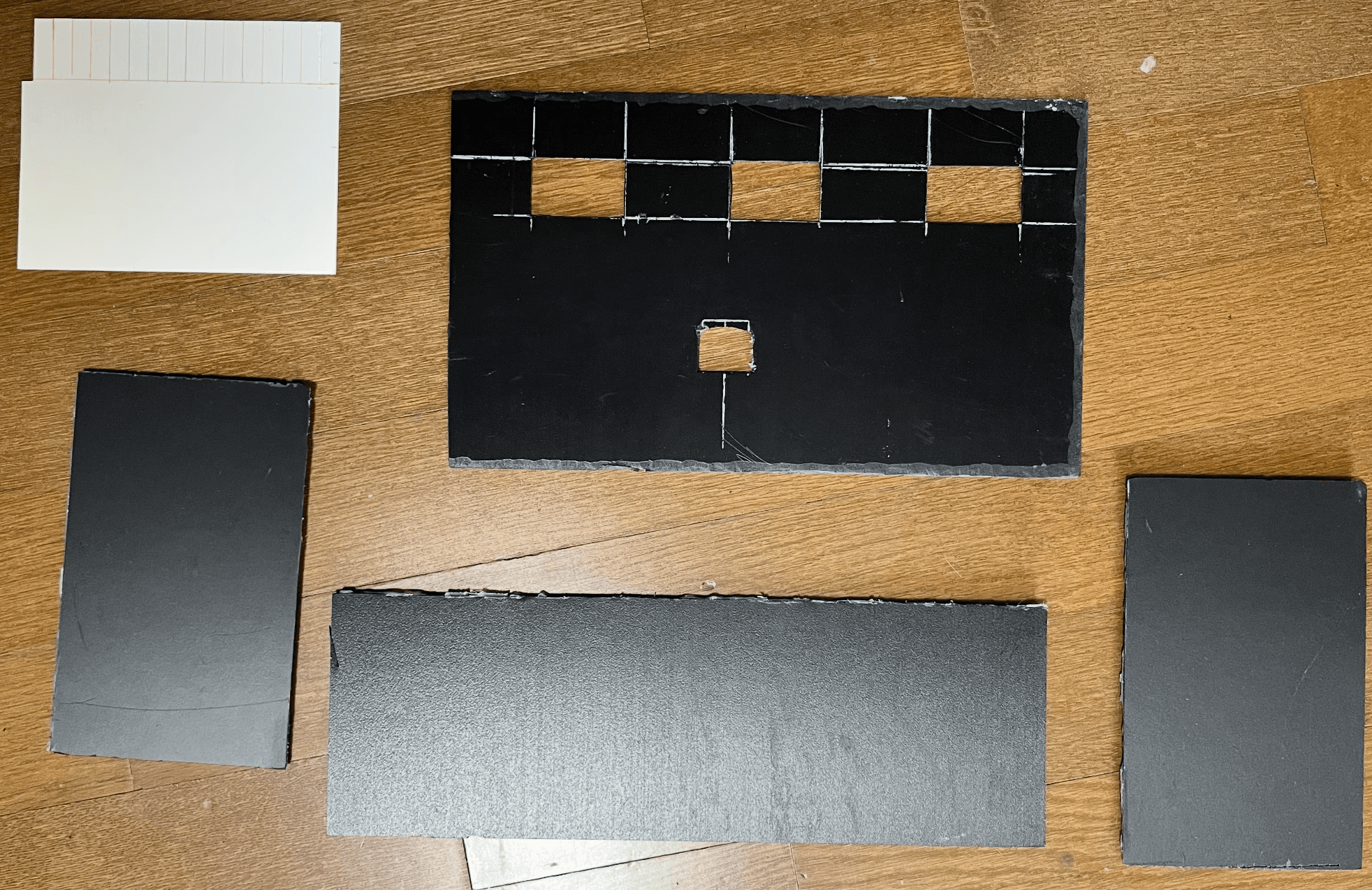
To validate the design at real scale, I locked in dimensions and moved into lightweight 3D models and cardboard mockups. These tests clarified what felt stable in the hand, how reels could be securely mounted, and where mechanical precision could be hidden while still presenting as chance on the surface.
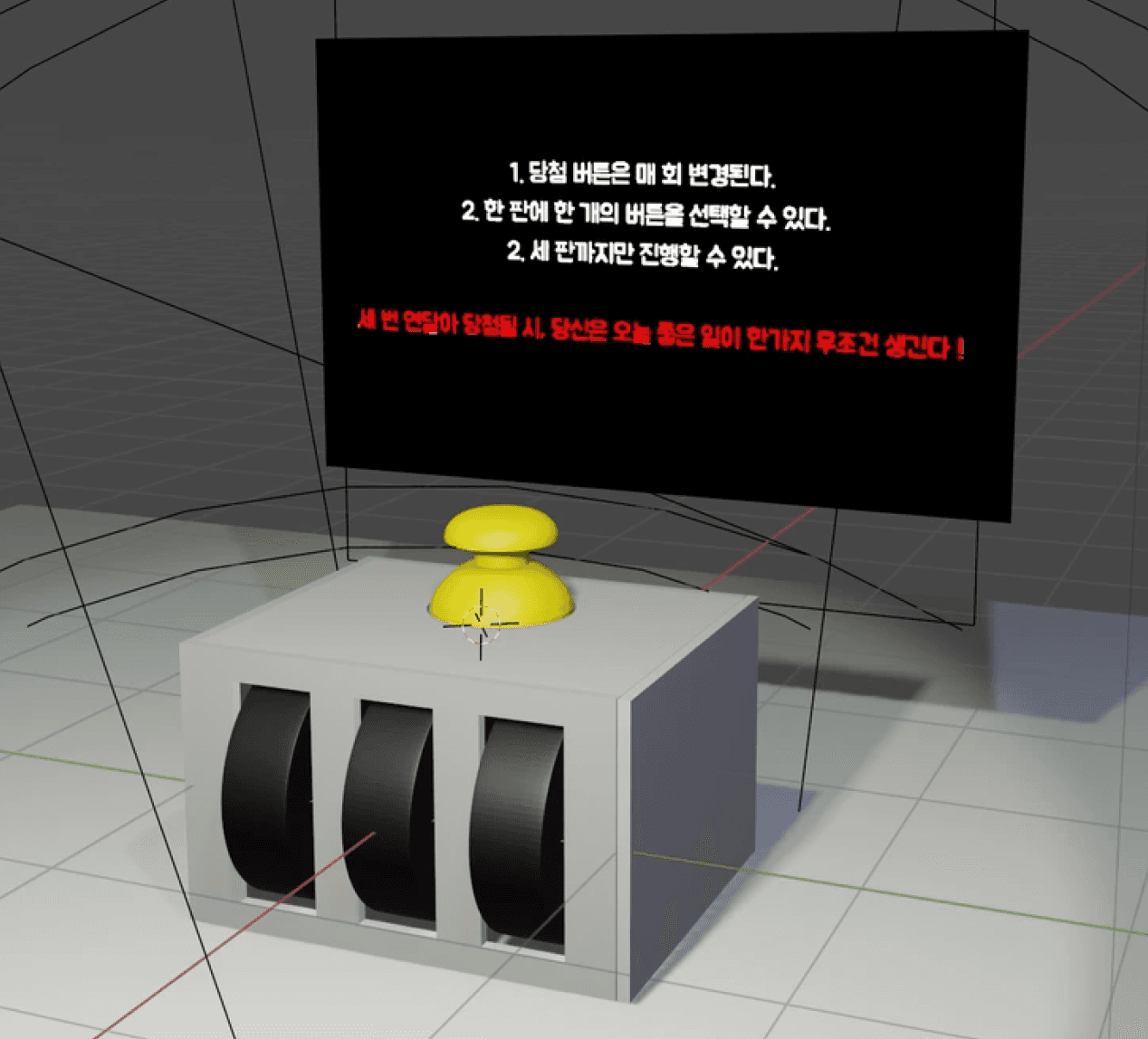
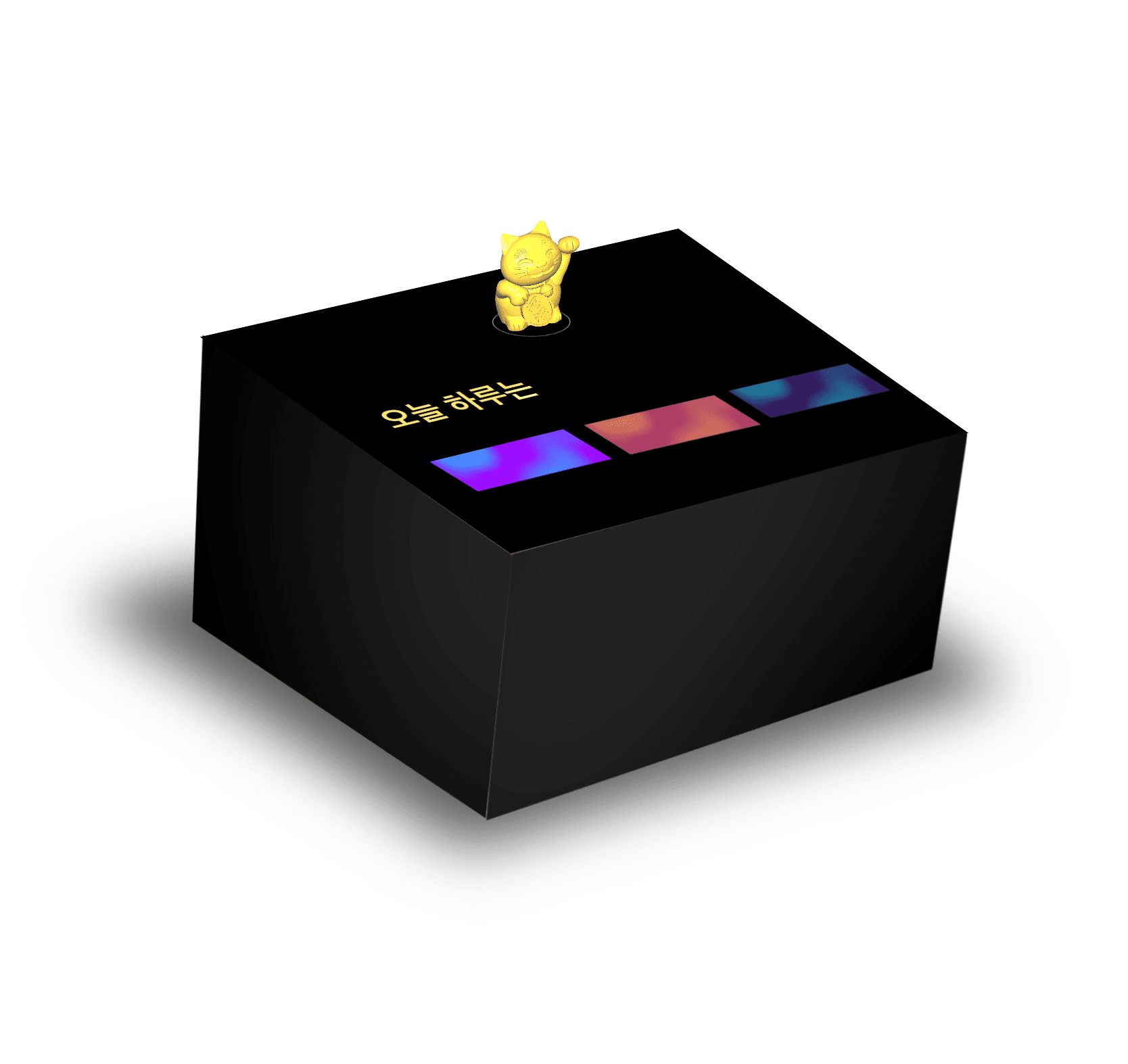
This process led to a deliberately minimal exterior that keeps focus on the idea itself: luck isn’t granted, it’s activated through action. I treated the box as a neutral frame, concentrating visual energy at the moment of interaction. The reels and pull handle became the only expressive elements, using saturated color to make the controlled “jackpot” feel unexpectedly alive.
Motor Control Development
To allow users to feel in control without revealing the underlying mechanics, I iterated on motor speed, torque, and trigger timing to produce motion that felt intentional and responsive. Through repeated success and failure testing, I refined motor behavior to maintain smooth feedback while preserving the illusion of “luck.”
Success Case
All motors activate simultaneously, then stop in a synchronized sequence at multiples of the designated angle.
Failure Case
Motors lose synchronization, operating individually and irregularly instead of following a unified control logic.
Defining Consistent System Behavior
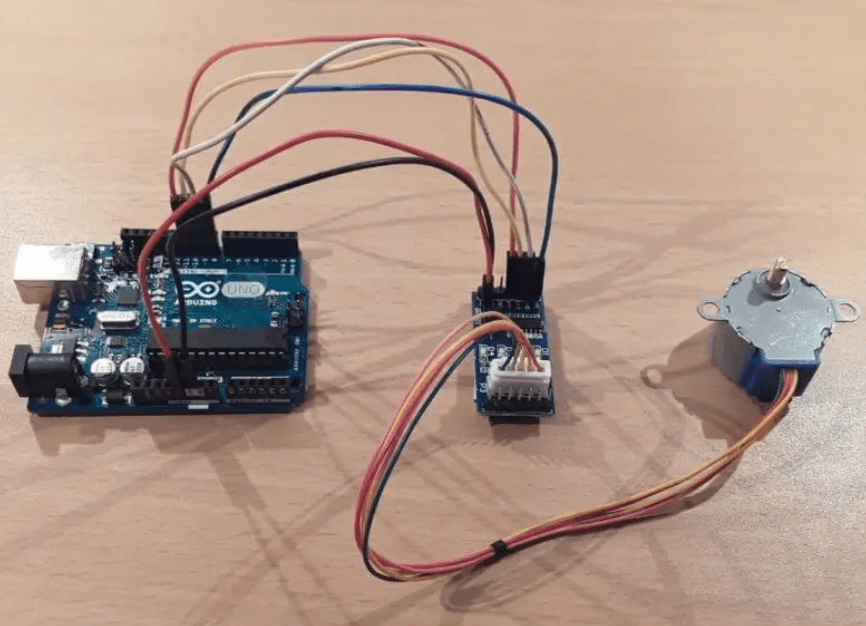
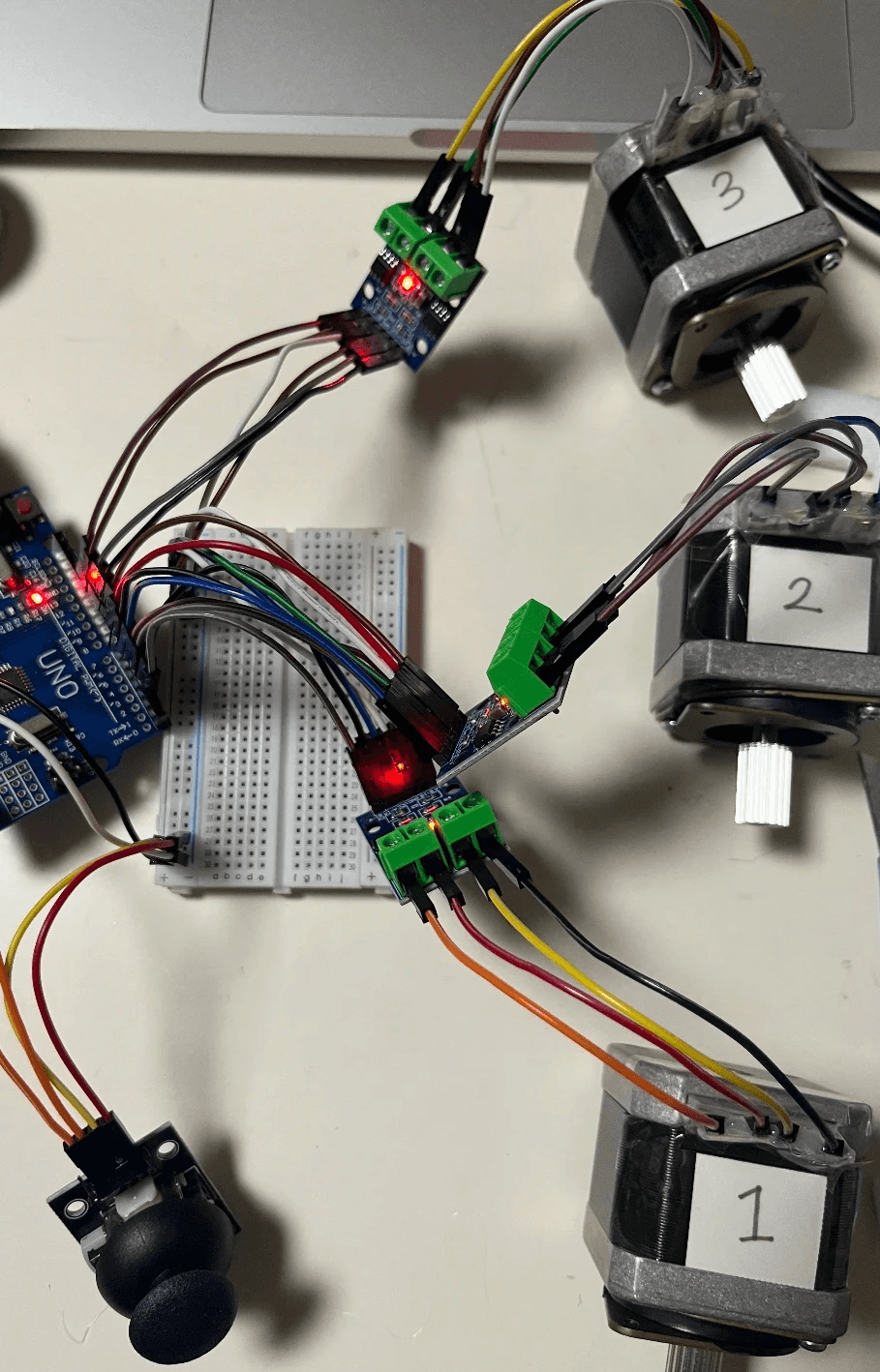
While developing realistic experience of Lucky Box, I developed the control logic through Arduino to define precise target angles and stopping conditions for each motor. Feedback from code reviews informed multiple refinements, with a focus on ensuring motors consistently stopped at the same positions across repeated activations.
In parallel, I conducted peer debugging sessions to isolate synchronization issues and refine the angle-based stopping logic, improving reliability and repeatability in system behavior.
Motor Speed Optimization
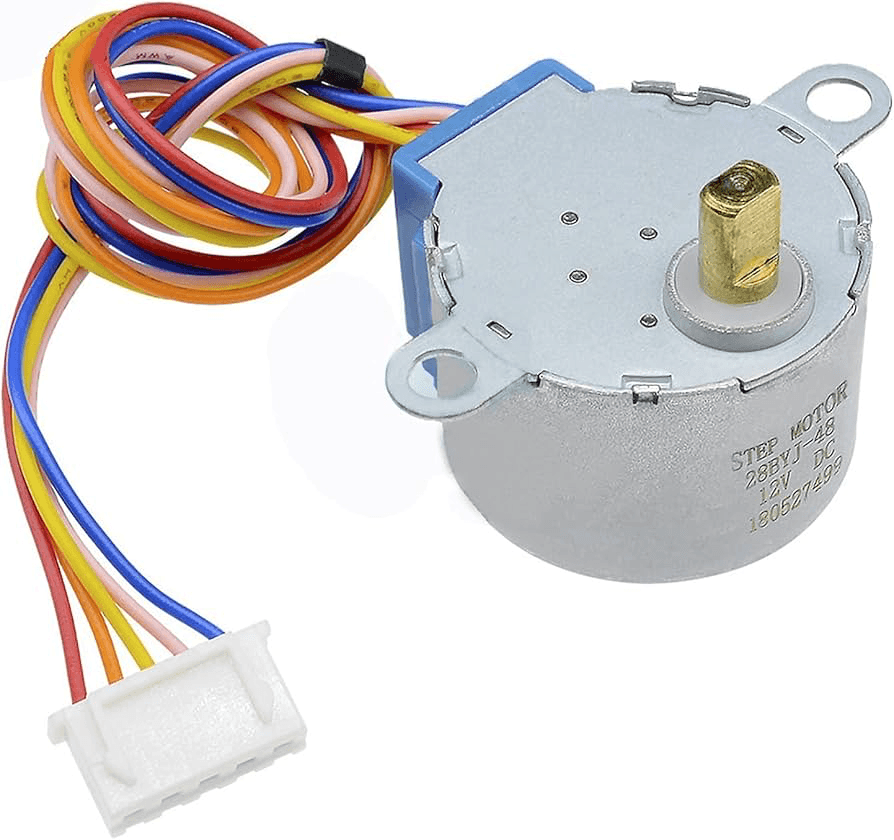
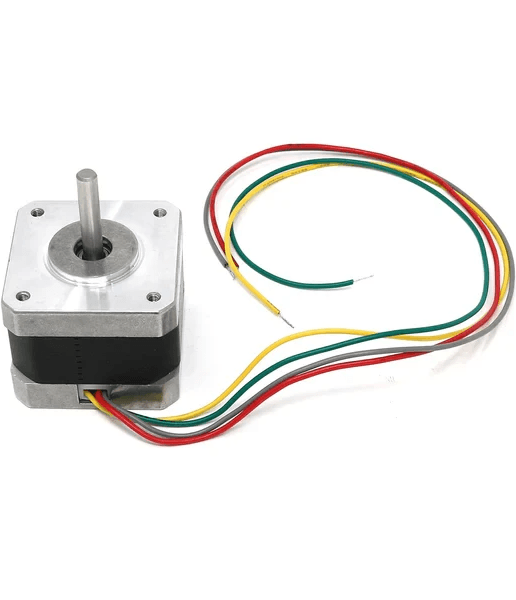
To achieve a slot-machine–like effect, motor speed was a critical factor. Initial motors proved too slow even at maximum speed, resulting in motion that felt sluggish and unconvincing. After testing multiple configurations and validating speed and voltage compatibility with Arduino Uno, I selected the 28BYJ-48 stepper motor for its balance of speed, reliability, and ease of integration.
28BYJ-48 stepper motor
Stepper NEMA 17 Bipolar Motor
System Testing & Iteratioin
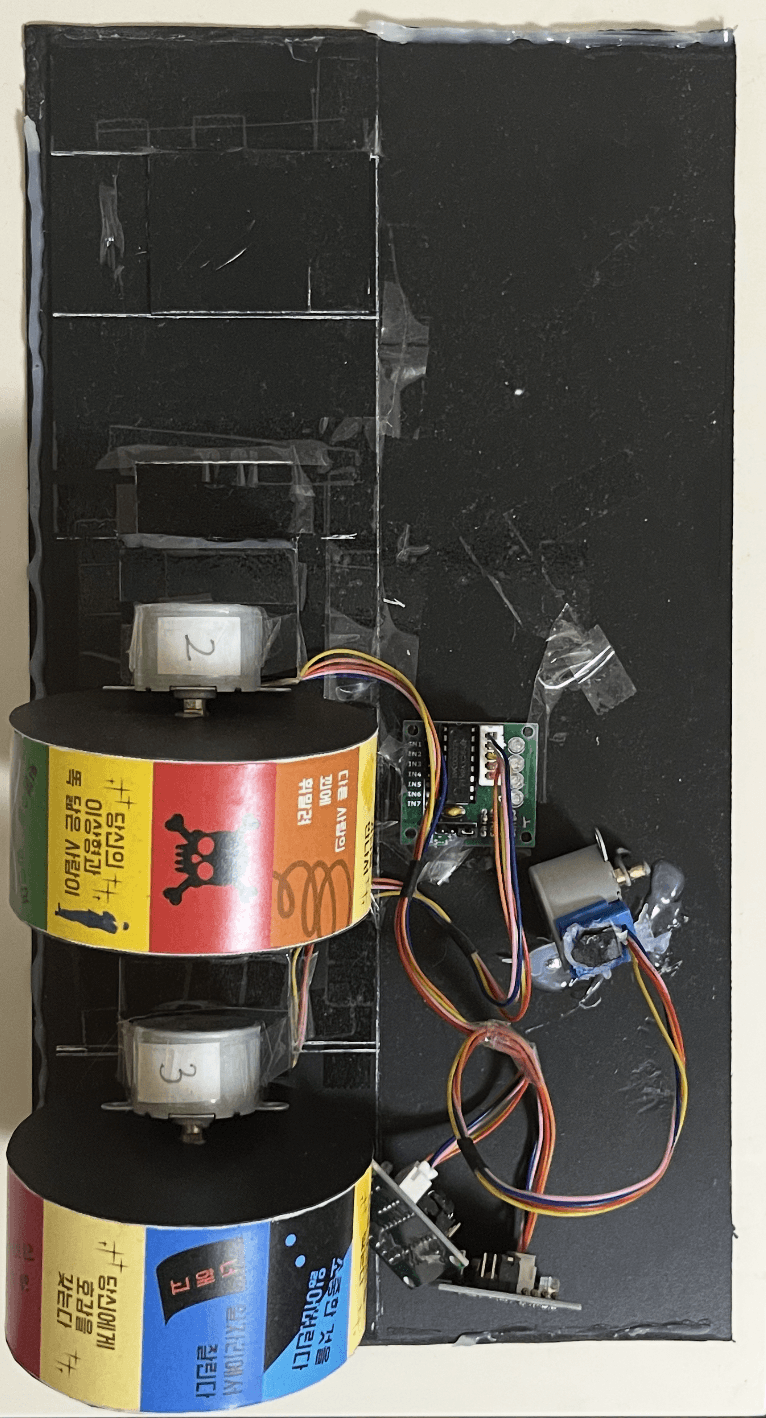
I integrated hardware and software components to stabilize the system as a whole and finalized the physical dimensions of the box. Hardware decisions were tuned to support consistent software performance, while control logic was refined to eliminate errors and ensure repeatable, synchronized outcomes across multiple runs.
04 | outcome
final prototype
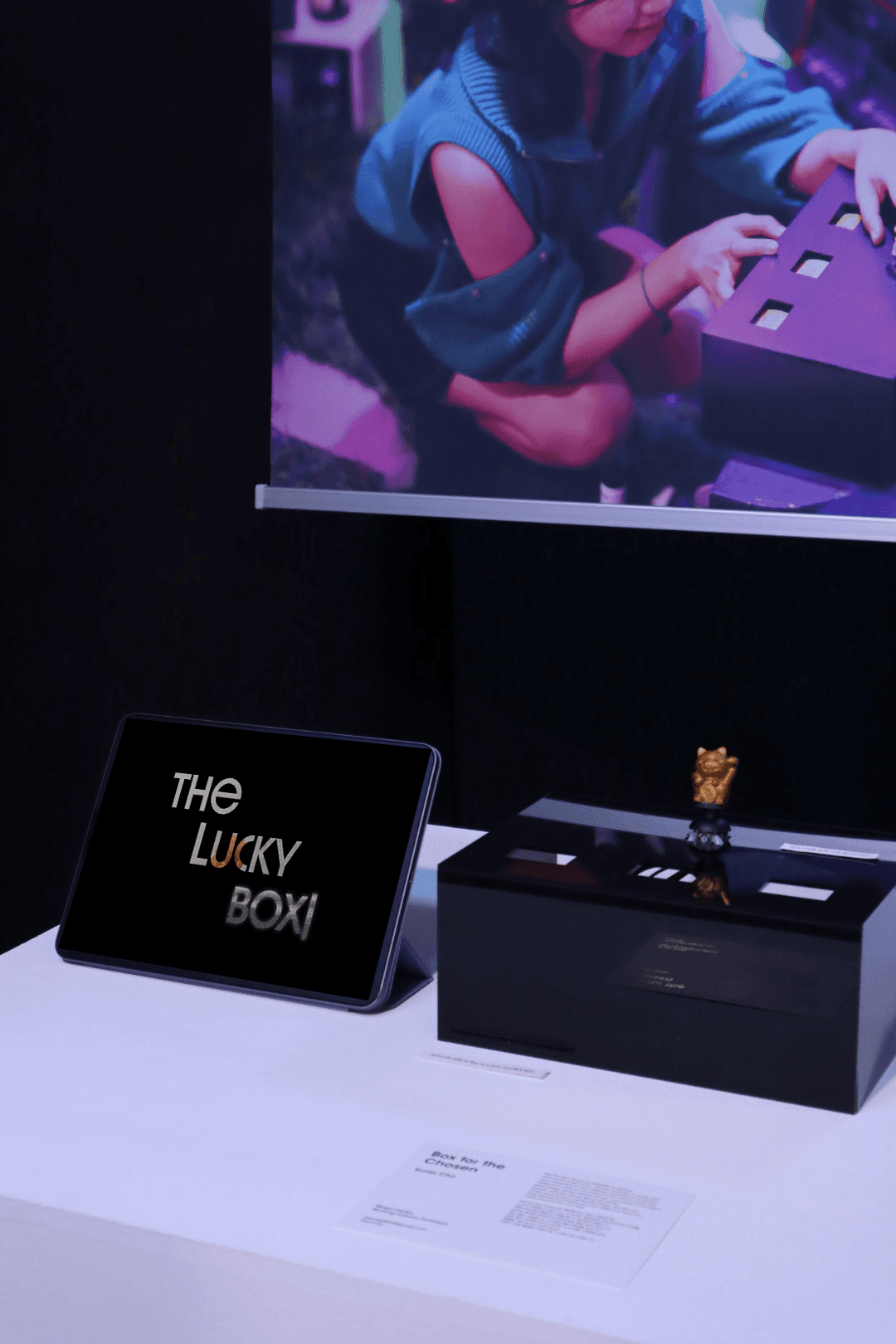
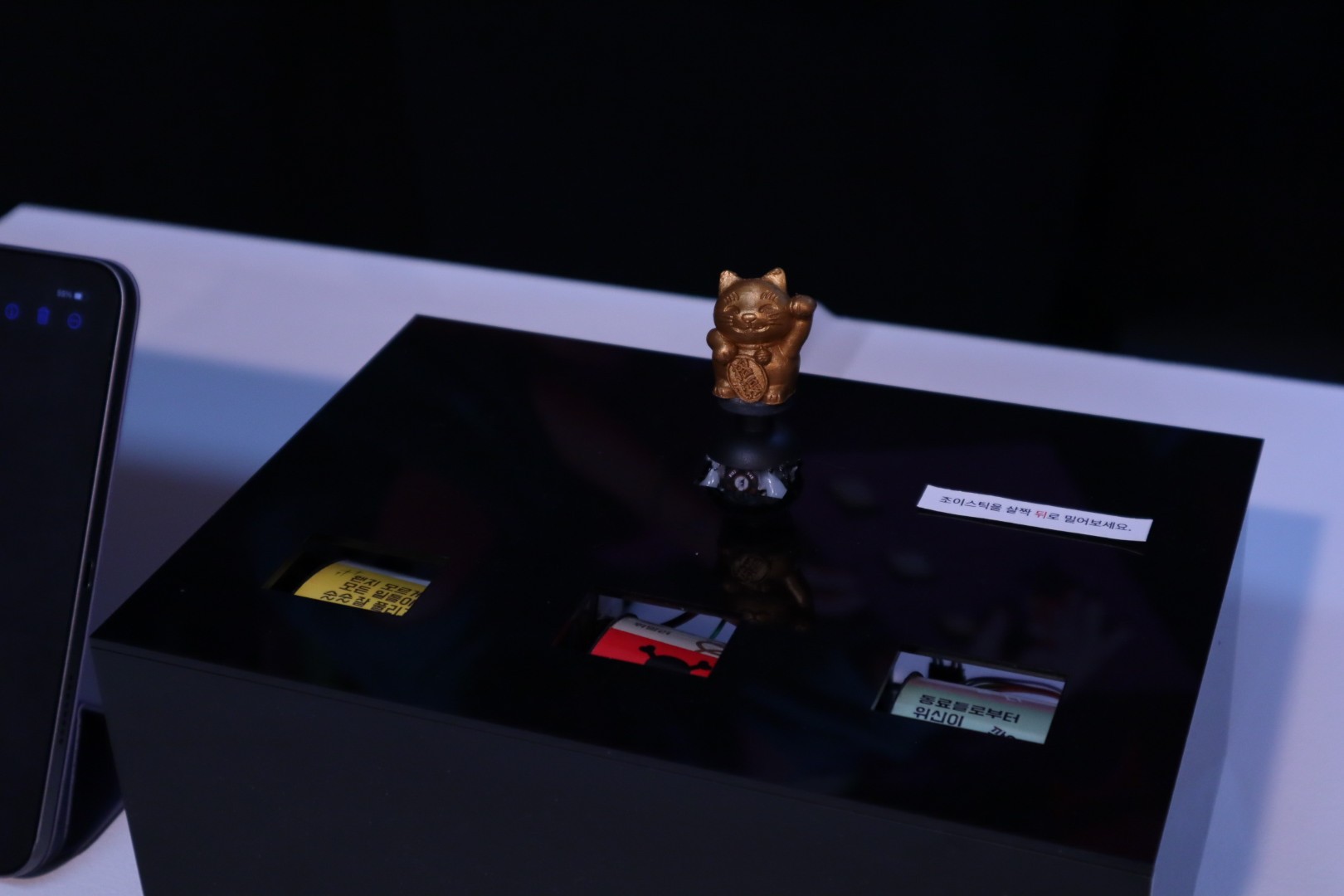
I assembled the enclosure and internal mounts, then integrated the Arduino wiring with motor drivers and two stepper motors. Through iterative tuning of timing and alignment, the reels consistently land on the intended “jackpot” position while preserving the tactile resistance and weight of the pull.
As a result, the final outcome centers on a physical interaction that feels deliberate and committed—where control is hidden beneath the surface, but the action remains fully embodied.


Exploded View
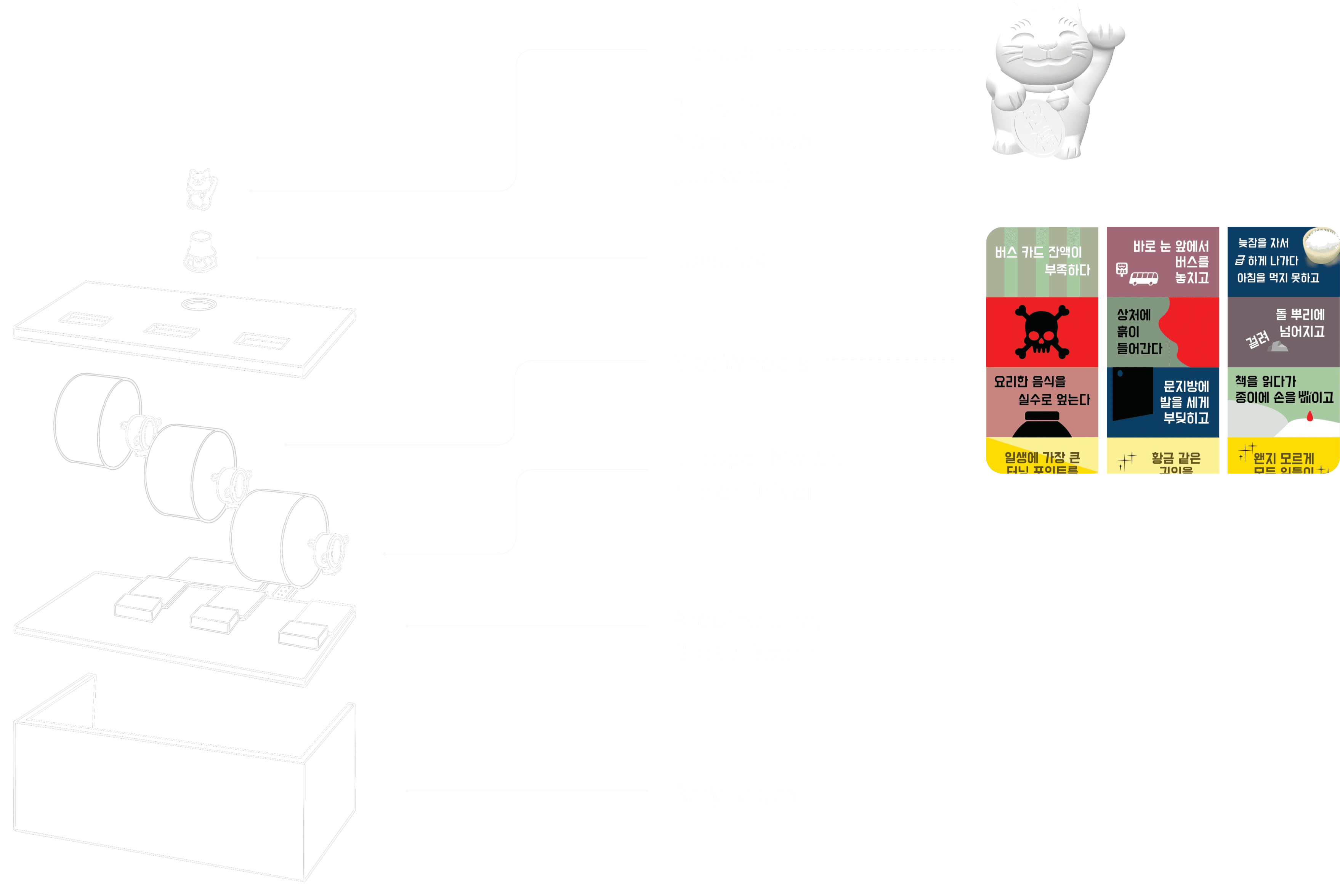
The Lucky Box is built as a simple, layered system:
The top layer houses the user interaction (handle and joystick).
The middle layer contains the reels and stepper motors.
The base holds the Arduino and wiring that drive motion.
To keep the exterior visually minimal, all wiring is tightly packed and routed internally, allowing the mechanics to disappear while the interaction remains front and center.
technical structure
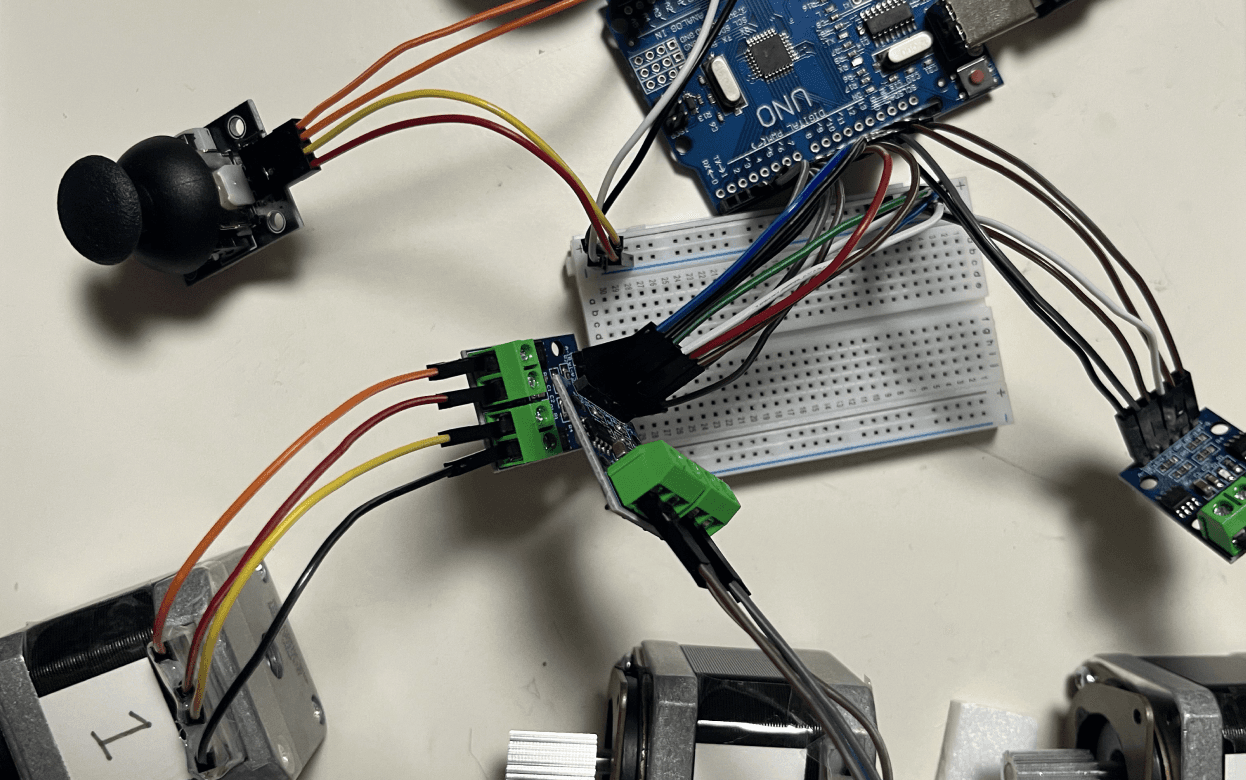
The Lucky Box operates on a straightforward input-to-motion loop. The joystick captures the user’s command, which the Arduino Uno interprets and converts into step pulses for the motor drivers. Two stepper motors then rotate the reels to predetermined positions, allowing the “chance” visible on the surface to be precisely controlled underneath.
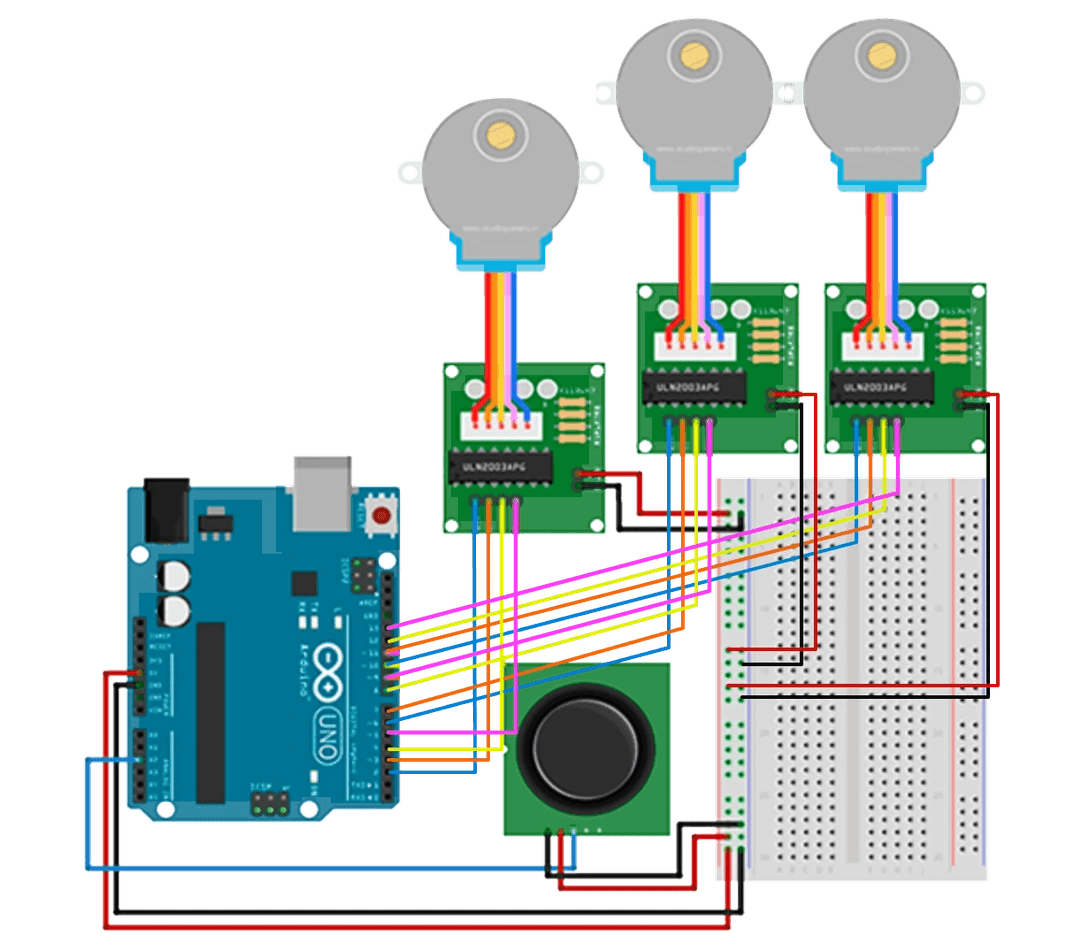
Joystick
Bread Board
Motor Driver
2 Stepper Motors
Arduino Uno
How It Works
The interaction begins with the user controlling the joystick, directly shaping the motion of the system. Arduino translates the analog input into coordinated motor control, driving the stepper motors in real time. Once the input reaches the target condition, the mechanism automatically aligns to the jackpot position, ensuring a stable and intentional outcome.
05 | Validation
what i learned
01
"Designing Systems as a Whole"
Balancing hardware, software, and experiential factors
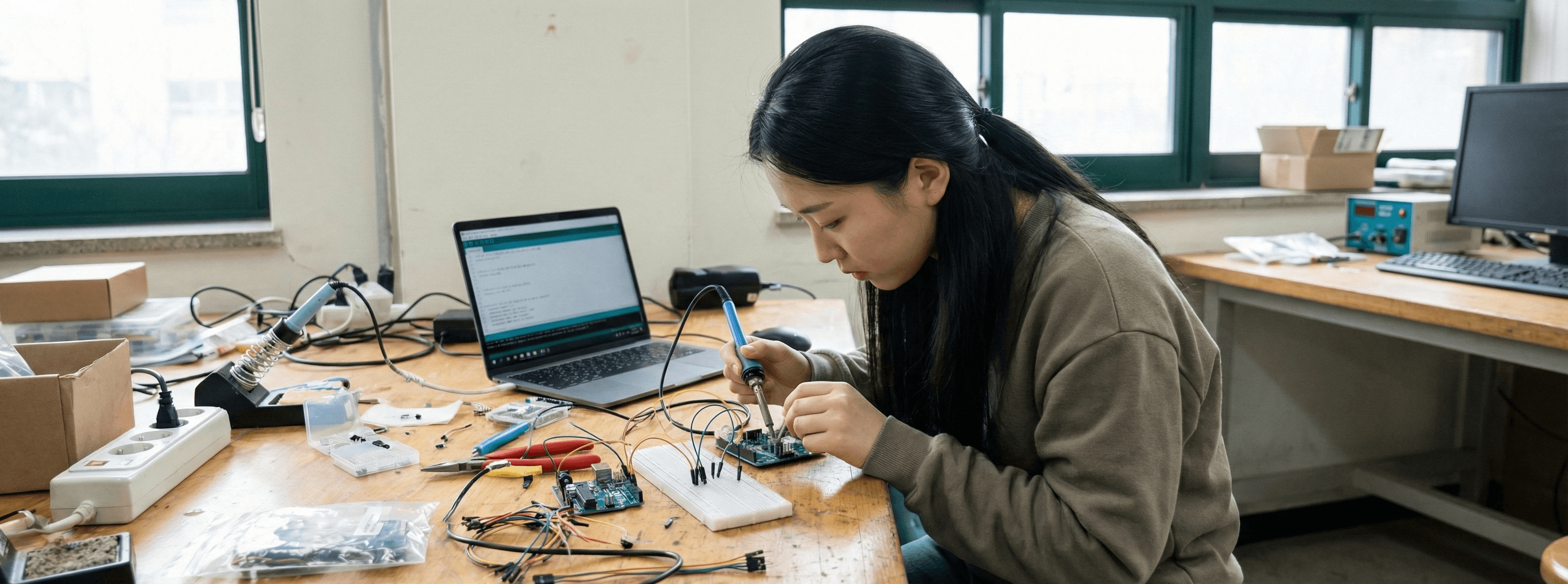
Through Lucky Box, I learned to approach interactive systems holistically, considering hardware, software, and experiential factors as a single interconnected system. Decisions around motor control, physical scale, viewing angles, and material texture directly influenced how the interaction was perceived. This project reinforced how small design choices at each layer shape clarity, coherence, and the overall experience.
02
"The Power of Playful Ideas"
From everyday observation to meaningful interaction
Lucky Box began as a lighthearted idea inspired by an everyday observation. Through building and refining the system, I learned that playful concepts can still carry weight—often creating stronger emotional resonance precisely because they are simple and familiar. This project showed how playfulness can be used intentionally to invite curiosity, engagement, and reflection through interaction.