Immersive VR Environmental Restoration Game
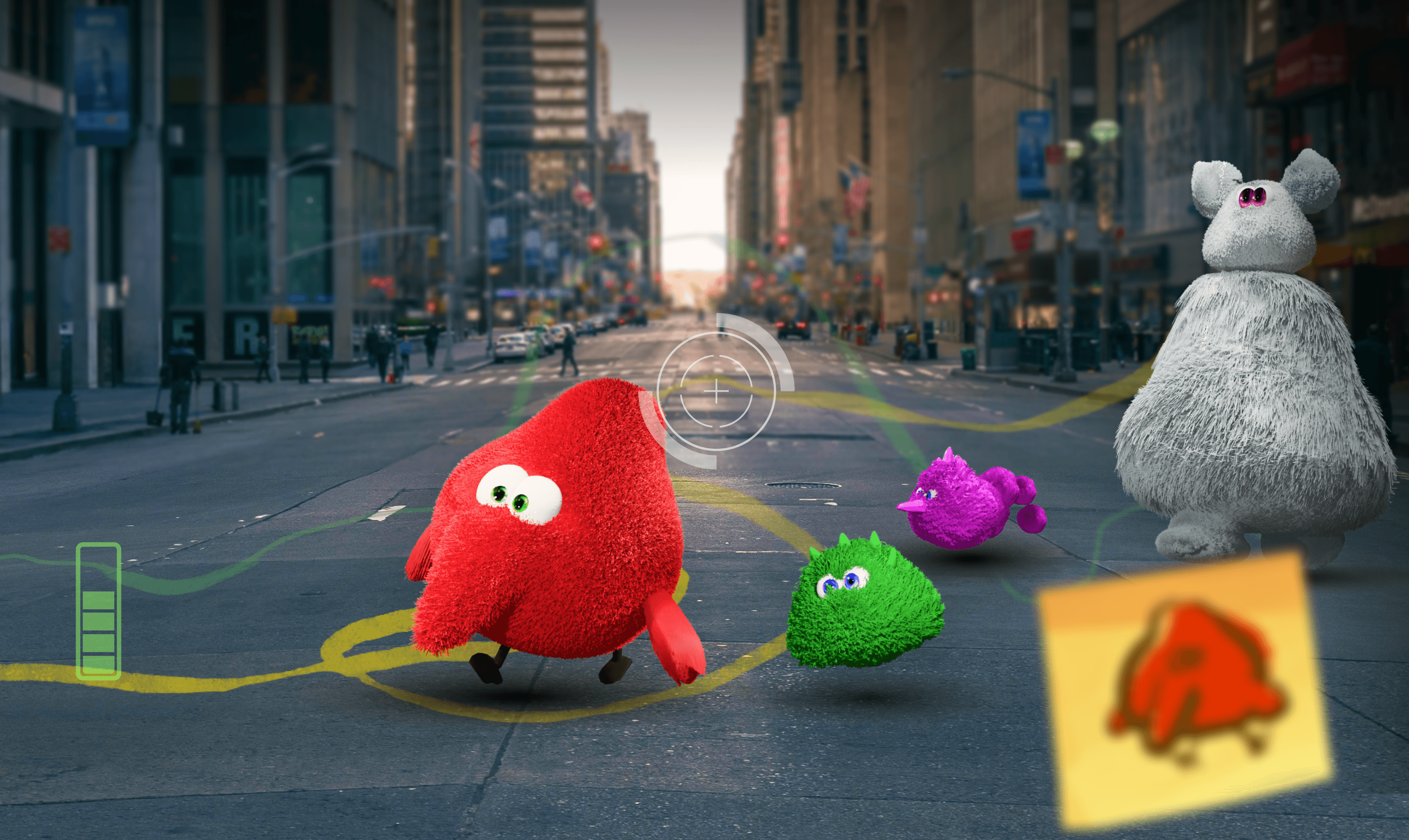
Fluffy is a story-driven VR game that reframes environmental awareness as an immersive, playful experience. Set in a world of hidden creatures, the game invites players to explore, restore, and care for their surroundings through a warm, paper-craft aesthetic—turning environmental restoration into a quest for discovery, curiosity, and connection.
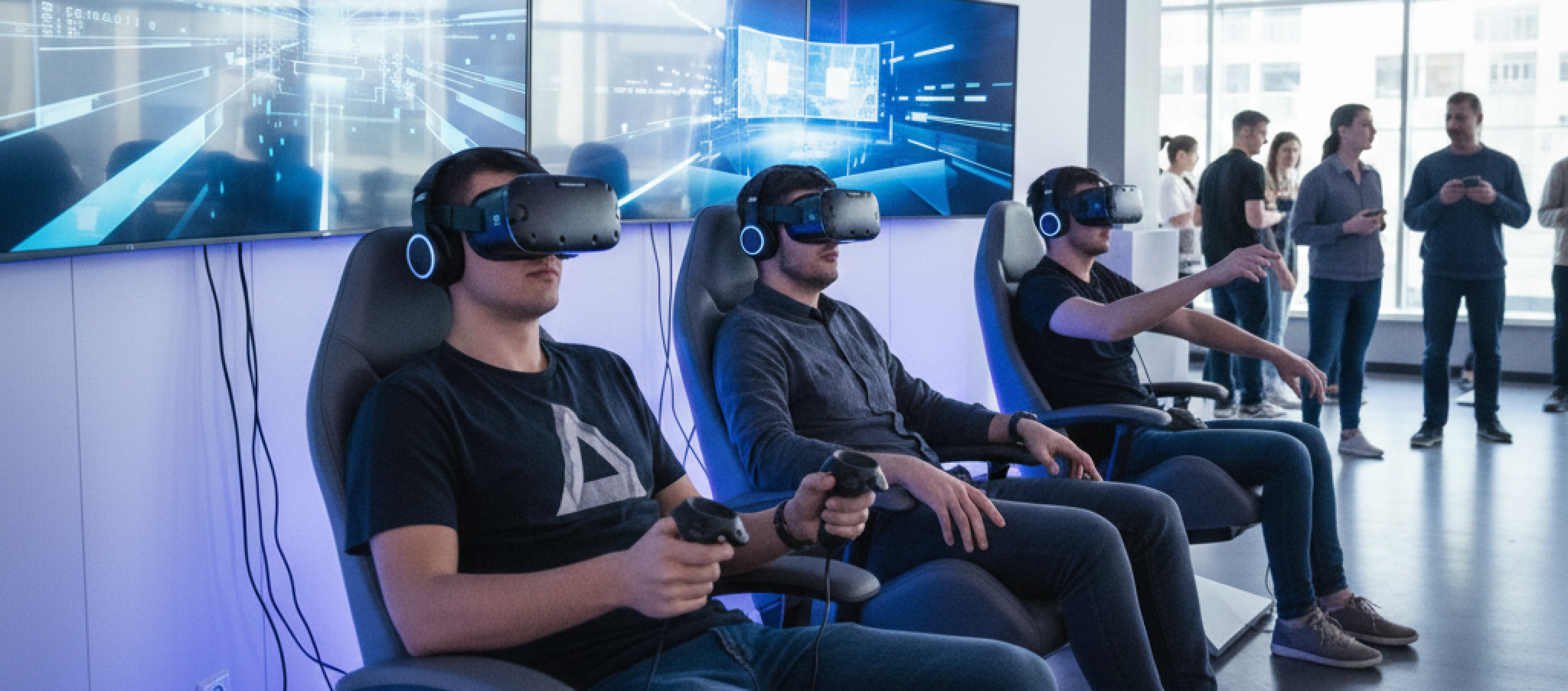
My role focused on designing spatial UI and immersive interactions that feel comfortable and emotionally engaging in VR. I designed interface layouts and interaction flows that support intuitive exploration, reduce fatigue, and help players stay oriented within the virtual space without breaking immersion.
MY ROLE
VR Interaction & Spatial UI Designer
Skills
Spatial UI Design (VR),
Immersive Interaction Design,
Visual Language Development,
3D Asset Planning & Prototyping,
Narrative-Driven Design
Team
Personal Project
Timeline
July 2022 - September 2022
01 | overview
Key highlights
Fluffy reframes environmental care by turning it into a tactile, story-driven VR experience. Through a warm paper-craft aesthetic and a world of hidden creatures, the project shifts responsibility from moral obligation to playful discovery—making care feel immersive, personal, and emotionally rewarding.
SOFTEN THE DISTANCE
Accessible Aesthetics
Environmental issues can feel abstract and heavy. Fluffy uses a warm paper-craft visual language to create emotional safety—lowering the barrier to entry and inviting curiosity over obligation.
DESIGN FOR COMFORT
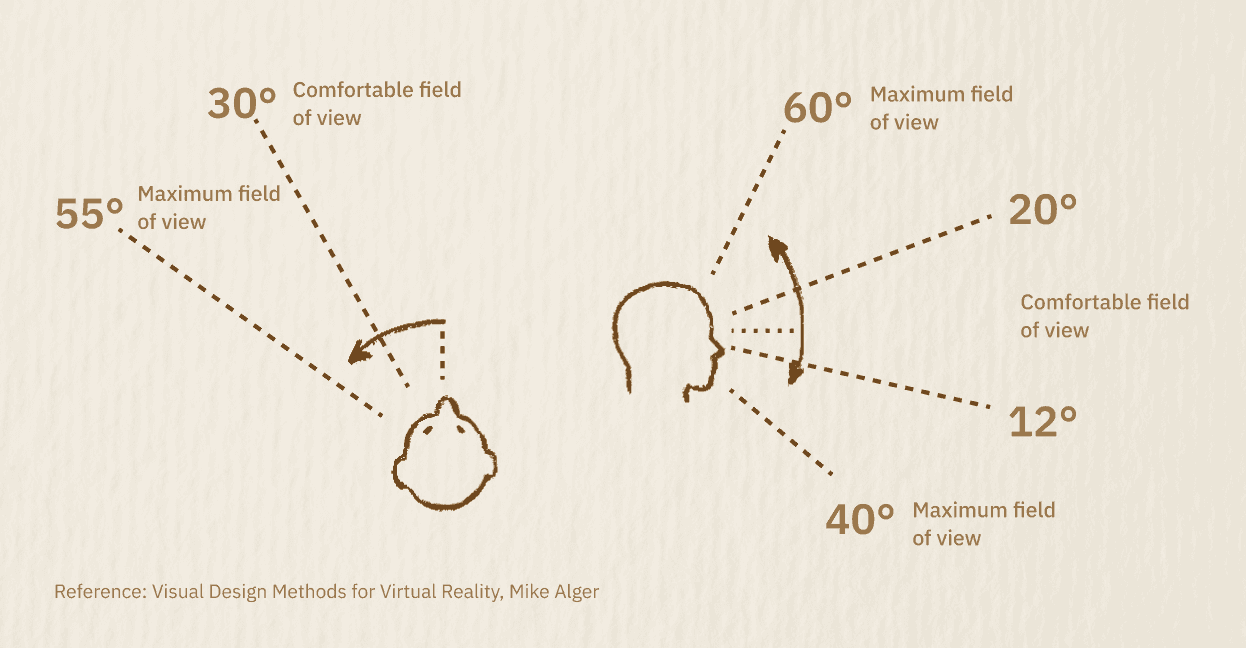
Ergonomic Spatial Intuition in VR
Immersion starts with physical ease. I structured the world around ergonomic viewing angles and comfortable interaction ranges, reducing fatigue so players can stay focused on exploration and clue-tracking.
MAKE CARE REWARDING
From Passive Duty to Active Quest
Fluffy turns preservation into a series of rewarding actions—track, discover, connect. This loop shifts players from passive observers to active guardians, making ecological care feel personal and meaningful.
02 | concept
background
Environmental issues can feel abstract and heavy. Fluffy uses a warm, paper-craft visual language to create emotional safety—lowering the barrier to entry and inviting curiosity before obligation.

When sustainability feels like someone else’s problem
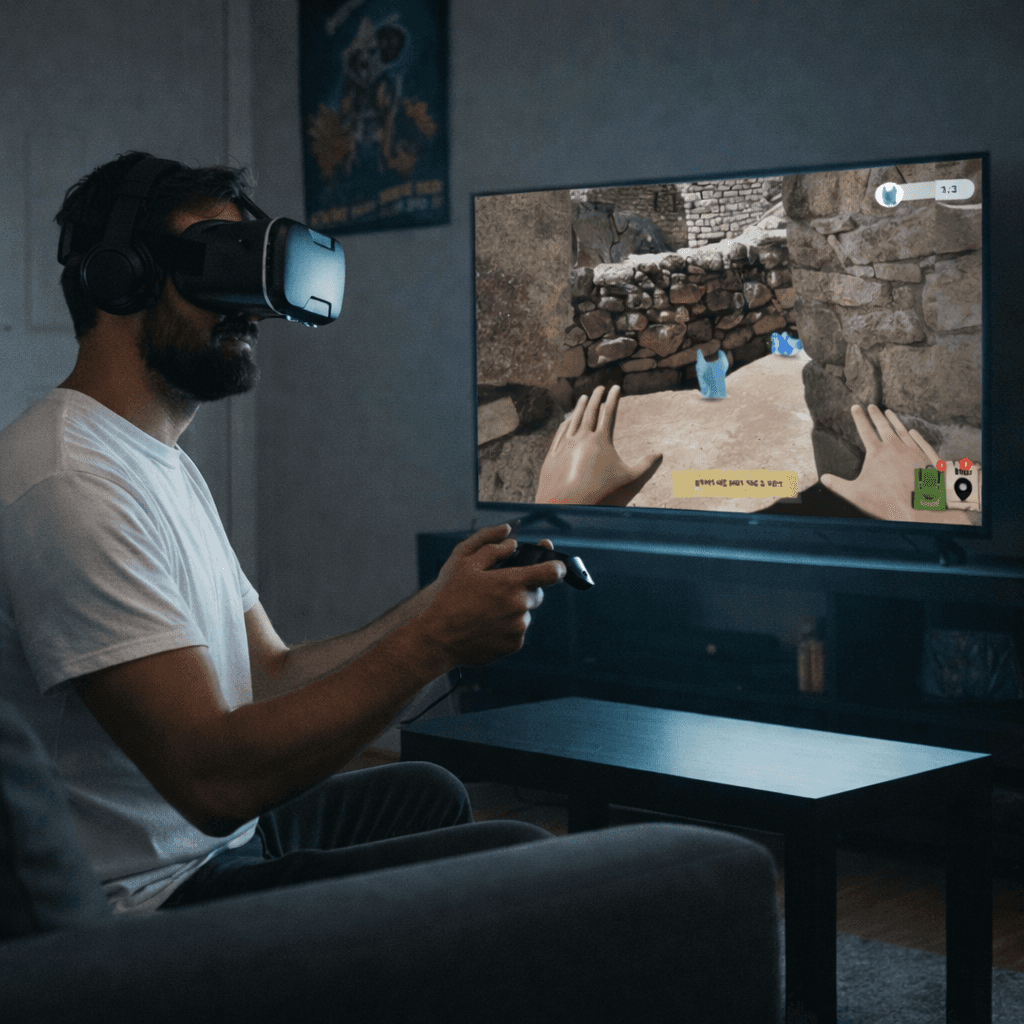
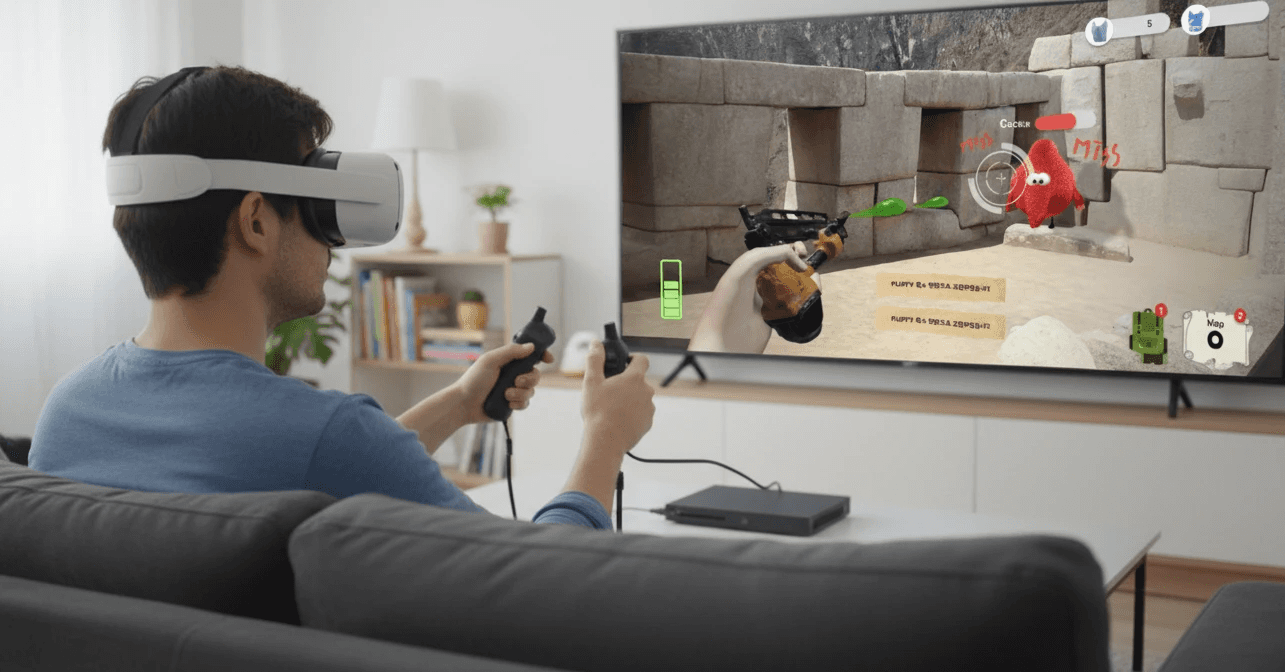
When environmental awareness emerges through play and exploration
Environmental awareness rarely fails not because people don’t care, but because it is communicated in ways that feel distant and emotionally demanding. This disconnect led me to ask myself:
💭 How might we transform environmental preservation from a distant moral responsibility into an emotionally engaging, playful experience that invites personal connection and care?
03 | development
Shaping the Build
overall project direction
I aimed to build a playful eco-themed VR game that makes a familiar environmental message feel lighter and more engaging. After ideation, made the concept tangible by sketching readable game characters, building early 3D assets in Blender, and iterating through solo in-headset checks and screen-based prototyping to adjust scale and interaction distance.
Character Form Exploration
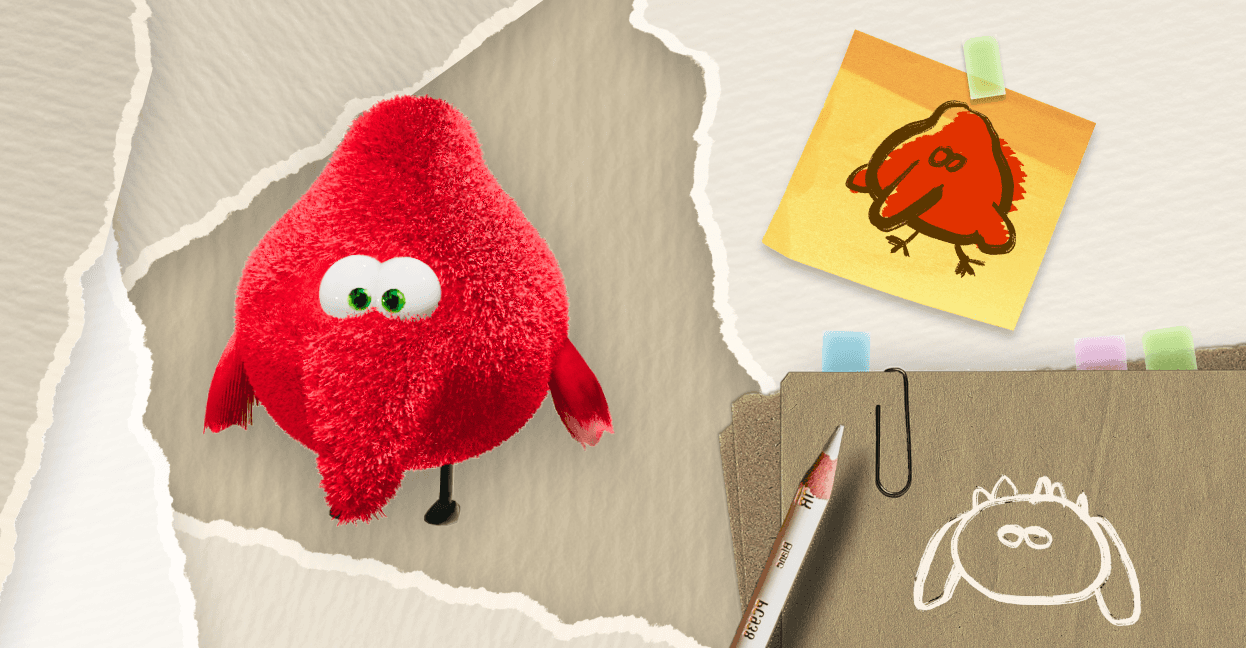
Sketched game characters to test silhouettes, scale, and readability.
3D Asset Prototyping
Built early 3D assets in Blender and checked scale and interaction distance in VR.
Spatial Validation in VR
Tested in-headset and adjusted comfort, reach, and spacing.
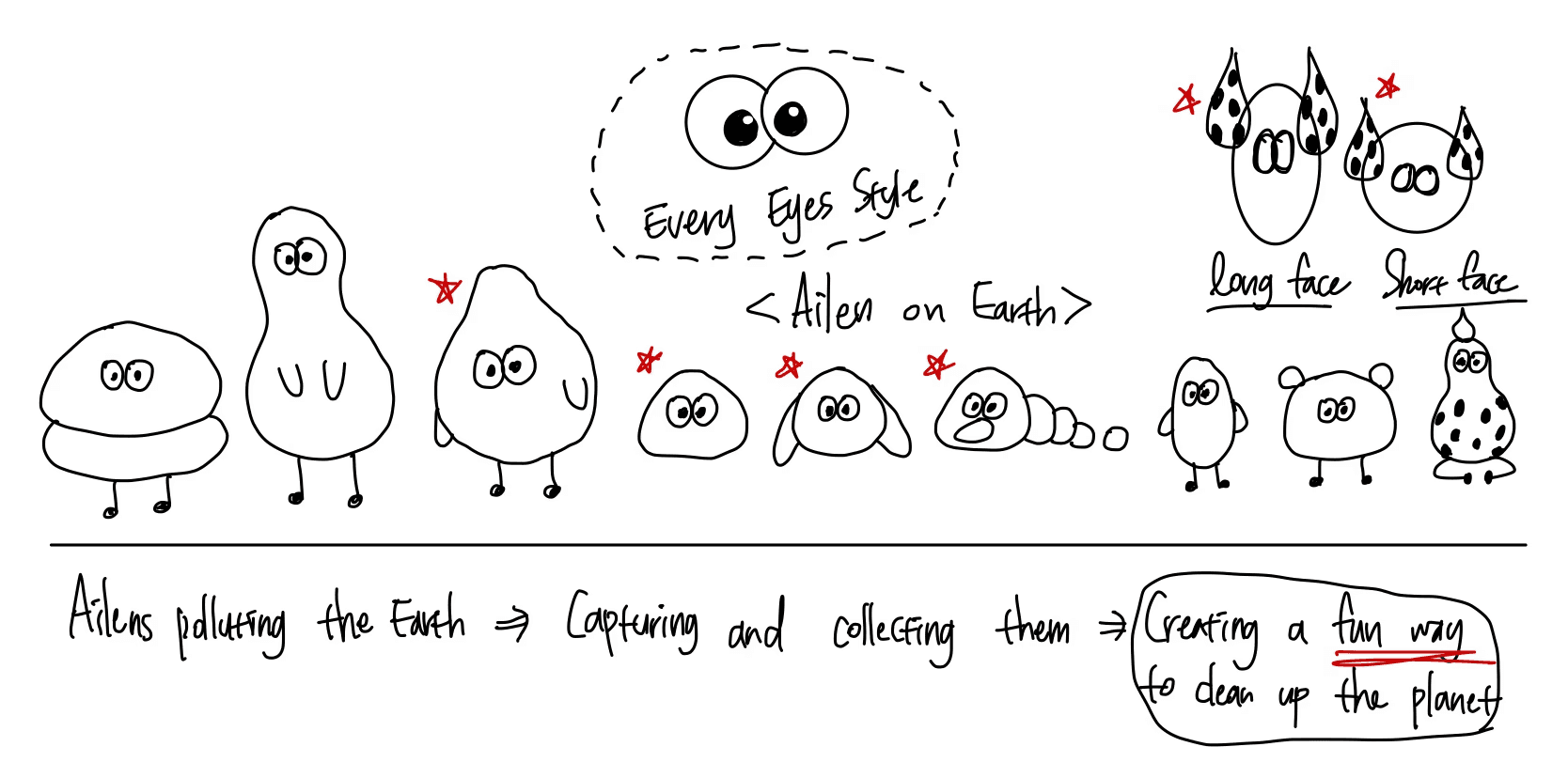
ideation sketch
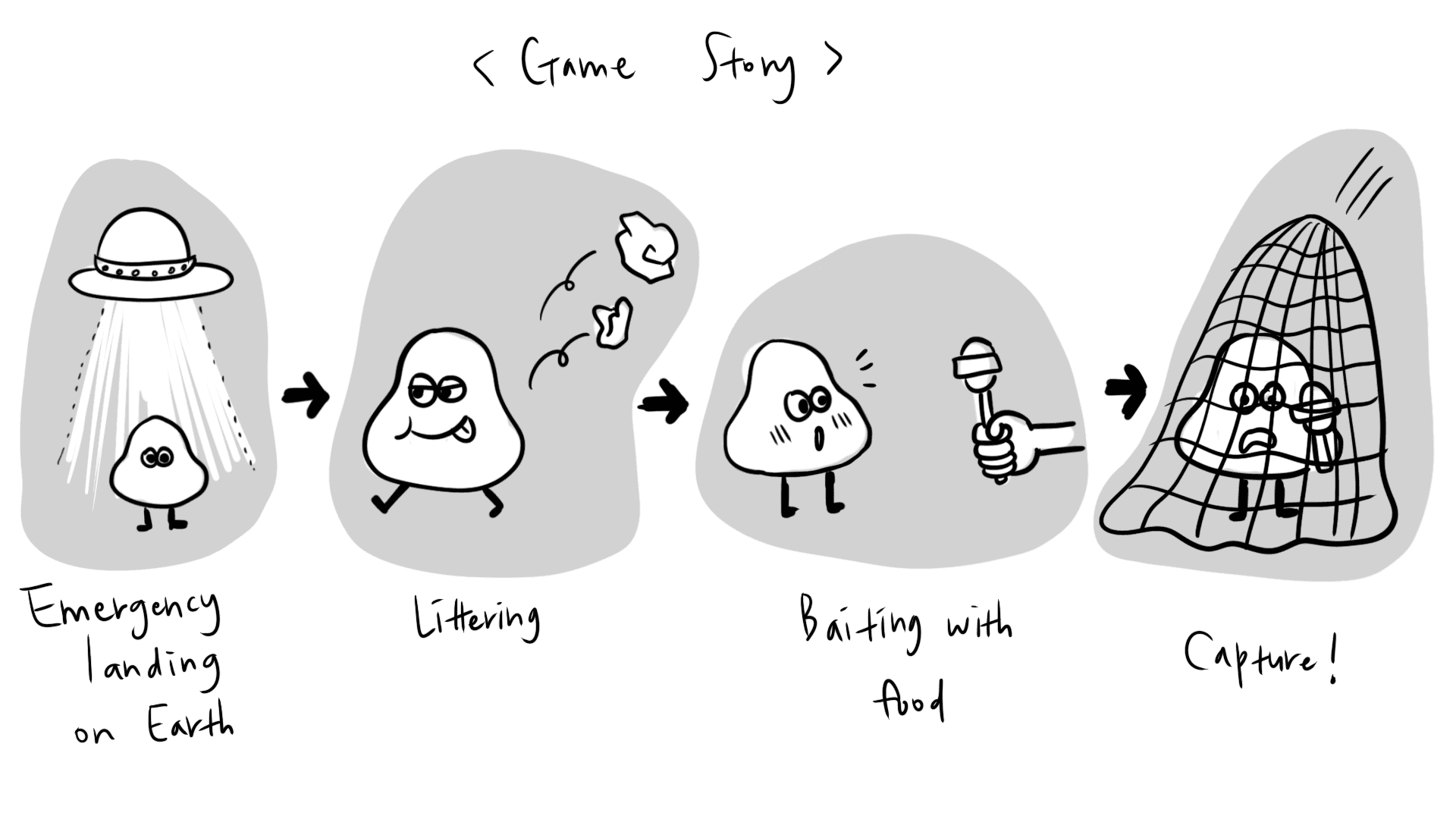
I started with the idea of aliens that pollute Earth, but gave them rounded, friendly silhouettes to reduce the discomfort of capturing them. Using the “Every Eyes Style” study, I designed distinct personalities and visuals for each character, motivating clue-driven gameplay where players analyze patterns and collect them for the fun of discovery.
Playing flow
Fluffy is built around a clue-driven interaction loop that prioritizes observation before action. Players encounter environmental traces first, analyze patterns through collected clues, and only engage in non-lethal capture once sufficient understanding is formed. This loop reinforces intentional interaction while keeping the experience intuitive and repeatable.
" FLUFFY: Clue-Driven Gameplay Loop "

Enjoy the Loop !

Explore & Discover
Find Clues
Record & Repeat
Logbook Entry, Loop Restarts
Collect & Analyze
Gather items, Interpret Clues
Craft & Track
Convert to Ammo, Update Logbook
Encounter
& Capture
Non-Lethal Tackdown
04 | outcome
solution
During ideation, I focused on structuring how players move through the world, understand their role, and stay motivated across time.
" VR Journey-Based Investigation Game "
Grounded the narrative in a global research framework
Global Investigation
Structured progression as a journey map
Destination
Stage Map
Capture & Collection
Loop
Sustained motivation through meaningful collection
VR Layout Guidelines
Optimized UI placement for comfortable VR viewing
From Framework to Experience
The final prototype of Fluffy consolidates spatial navigation, clue tracking, and non-lethal creature capture into a single, coherent VR flow. Interactions are intentionally sequenced to move players from discovery to documentation before capture, reinforcing observation and pattern recognition rather than immediate action. This structure helps players understand progress through accumulated knowledge, not speed, as they work toward completing the world’s ecosystem.

Start
Entering Fluffy’s World
The opening screen establishes Fluffy’s warm and playful atmosphere, inviting players to begin their journey at their own pace through a calm and approachable interface.






Step 1
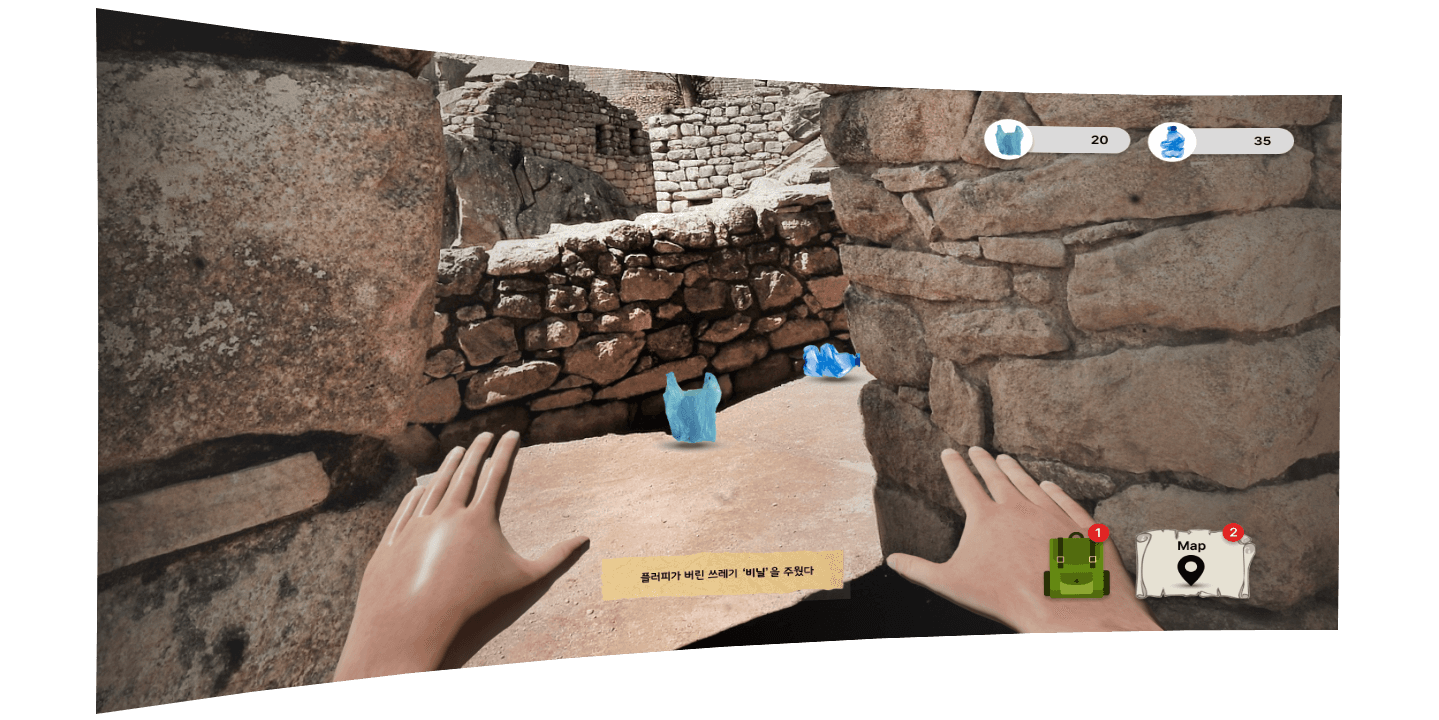
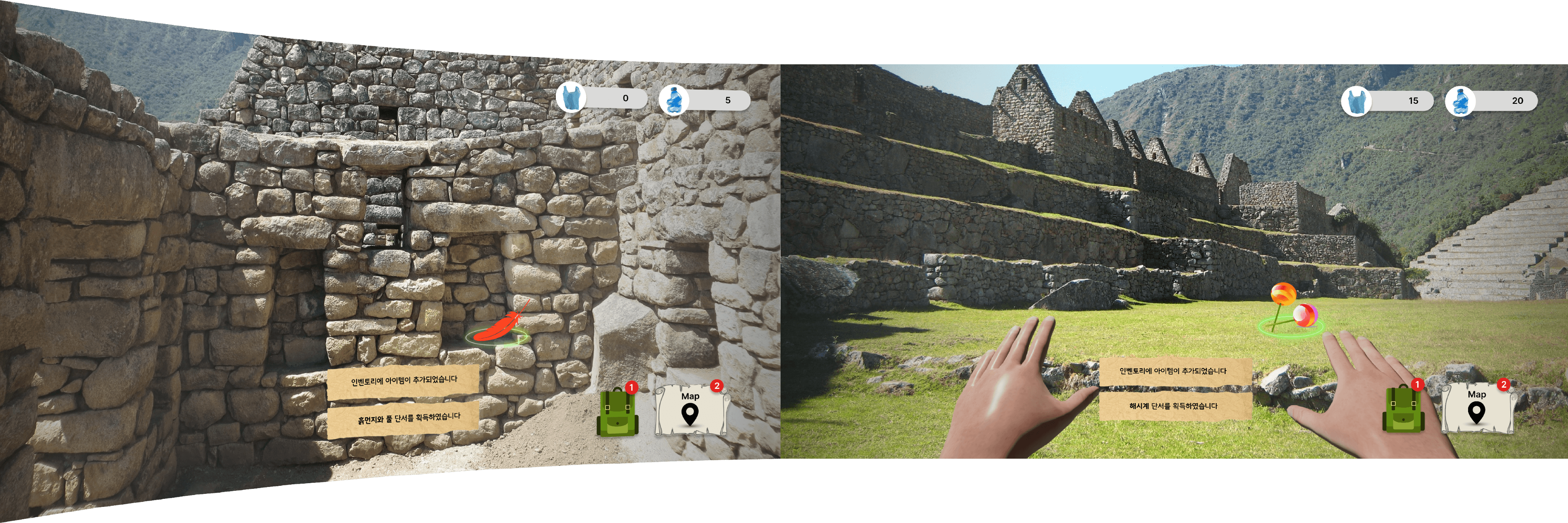
Plastic Bag Trace
A collectible environmental trace that powers the resource loop. Trash converts into non-lethal ammo for capture encounters.


ammo
Step 2
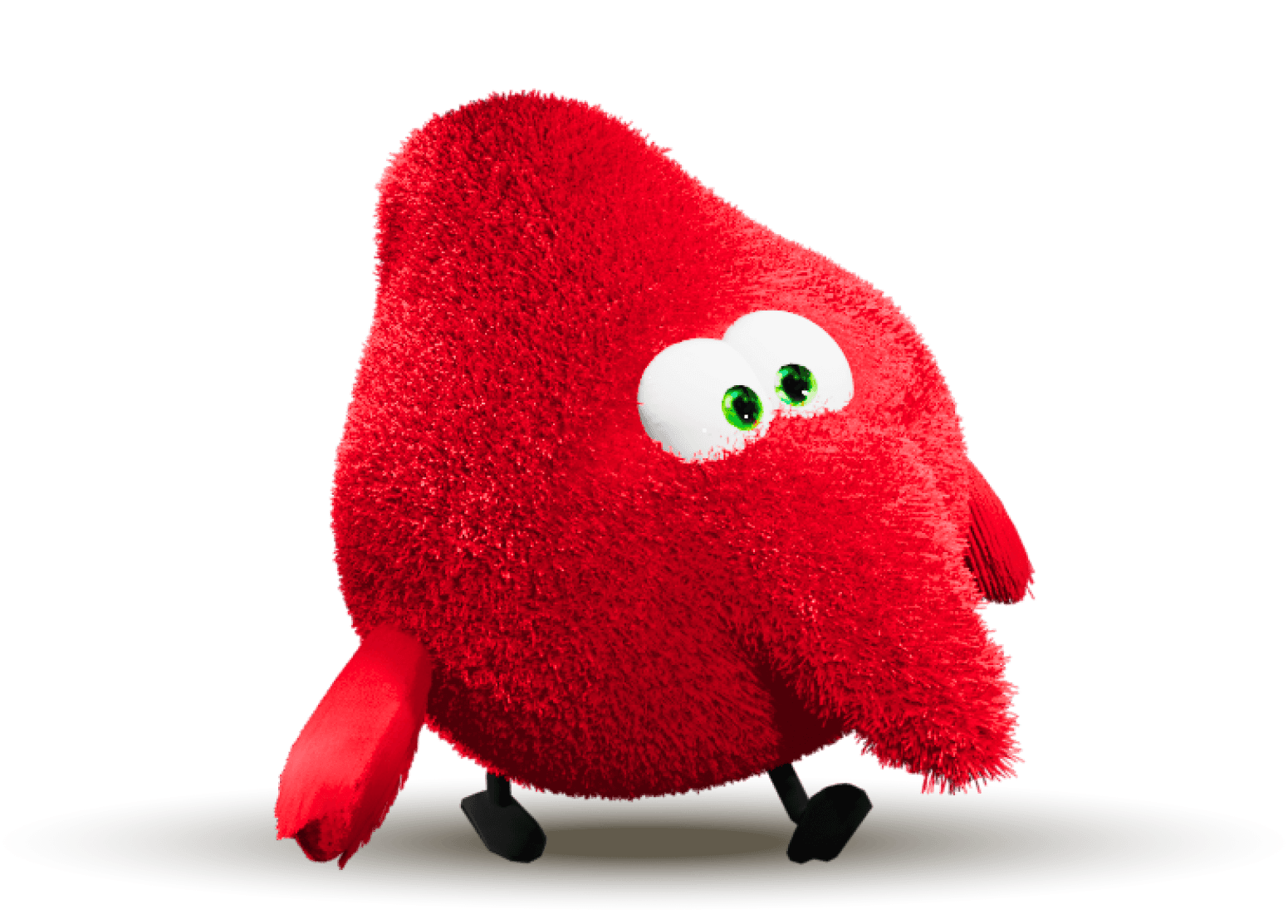
Red Fur Trace
A narrative clue that signals FLUFFY’s presence and guides exploration. Dirt and grass hint at the next search area.
Step 3
Half-Eaten Lollipop
A behavioral clue that reveals FLUFFY’s preferences and adds a symbol to interpret. It pushes the clue loop beyond collection.


Loop Resolution
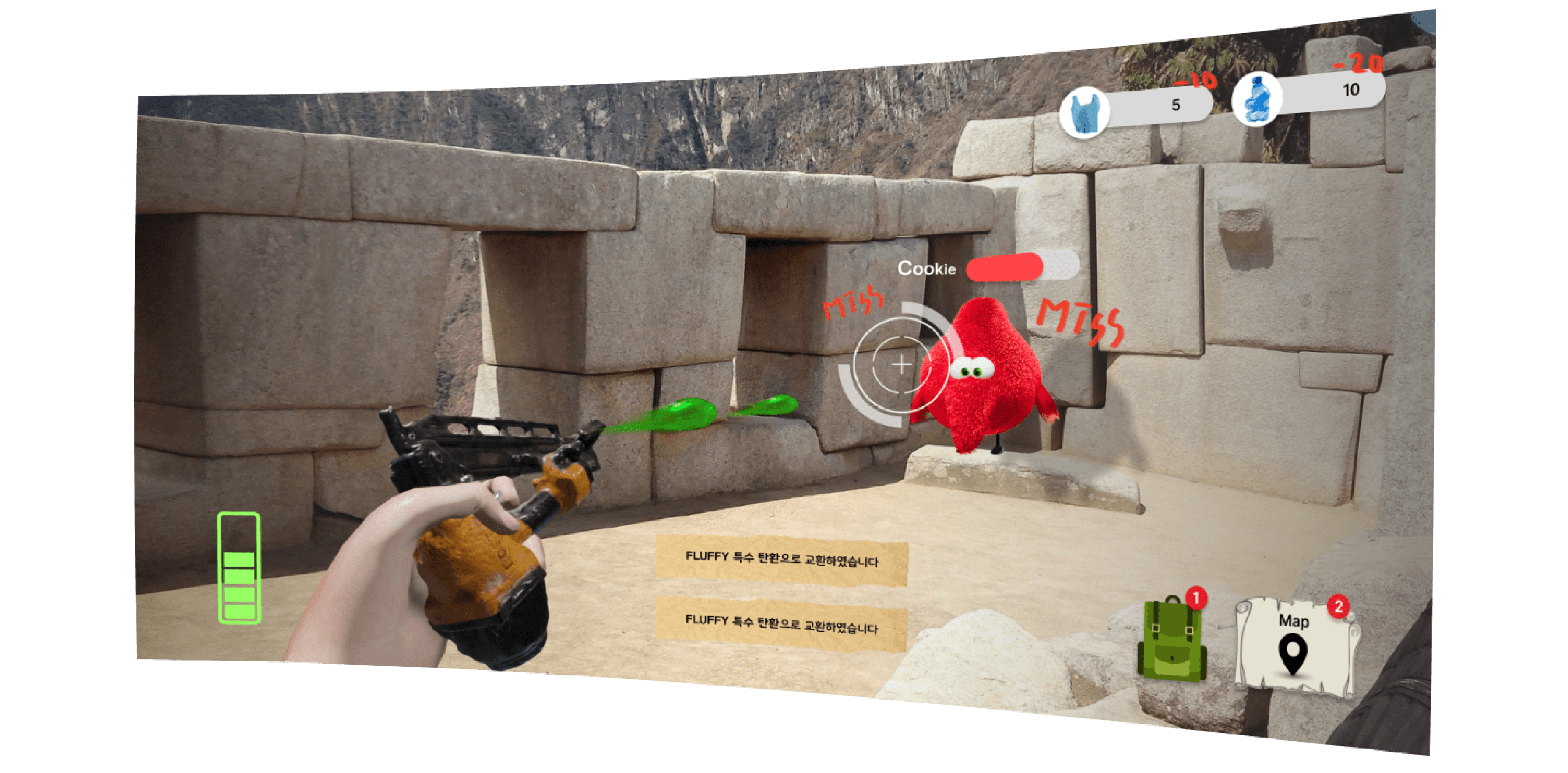
Final Capture and Collection
The loop resolves in a non-lethal capture encounter. Captured FLUFFY is saved to the logbook as a collectible entry.
Character profiles
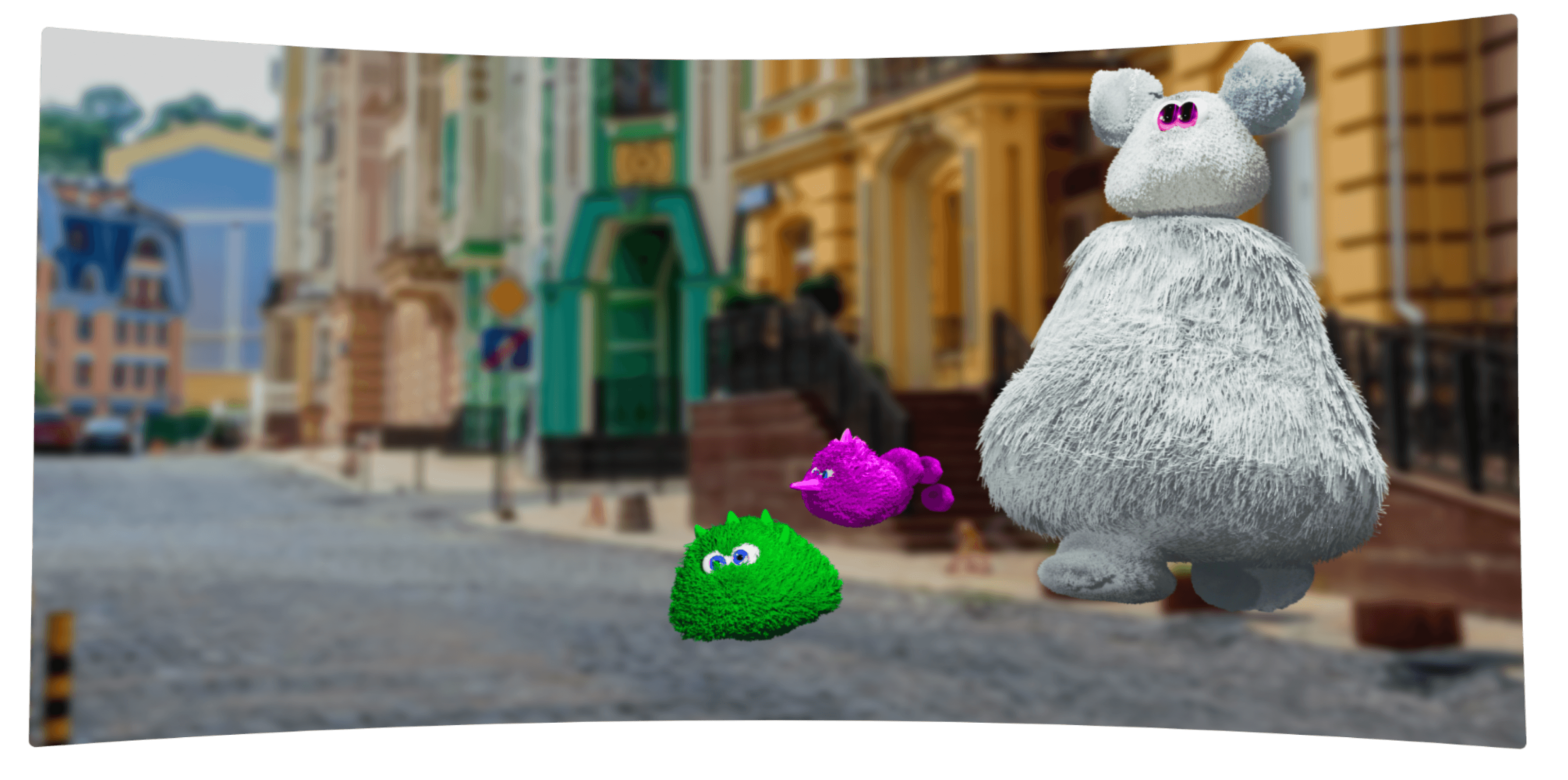
The Fluffies are trackable creatures designed around a consistent behavioral structure that teaches players how to observe and investigate over time. Each character is defined by three cues—distinct visual traits, preferred habitats, and environmental traces—allowing players to identify patterns through observation and complete the encyclopedia naturally through exploration.
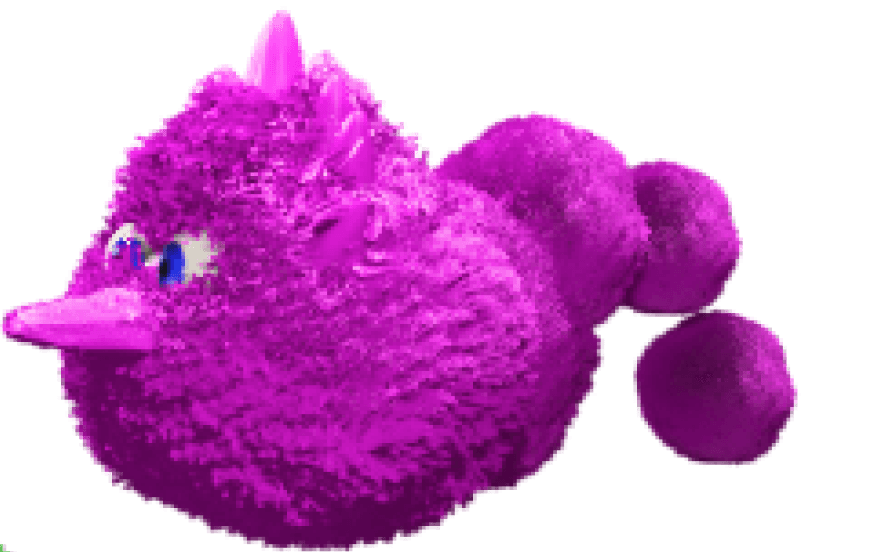
POCO
Traits: Quick, skittish, and low to the ground. Often darts sideways and disappears behind objects.
Likes: Shiny small items, narrow corners, quiet edges of landmarks.
Clues: Tiny purple fluff strands and small zigzag footprints that appear in short bursts.
SOLA
Traits: Curious and clingy; tends to hover near the player’s path as if following.
Likes: Warm light spots, open plazas, anything that “glows” (signs, reflections).
Clues: Soft yellow fuzz on surfaces and faint circular scuff marks where it lingered.
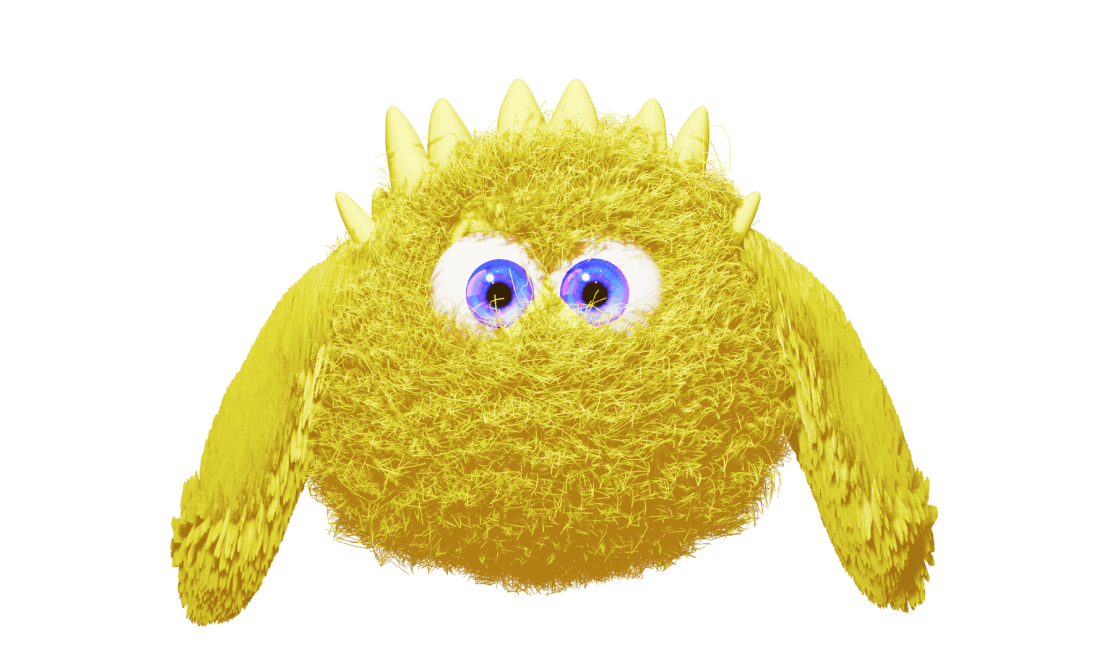
BEBE
Traits: Shy and still; hides in plain sight and barely moves unless approached.
Likes: Mossy textures, low shrubs, shaded areas near the ground.
Clues: Small green lint clusters tucked under edges and a single-file trail of tiny dots.
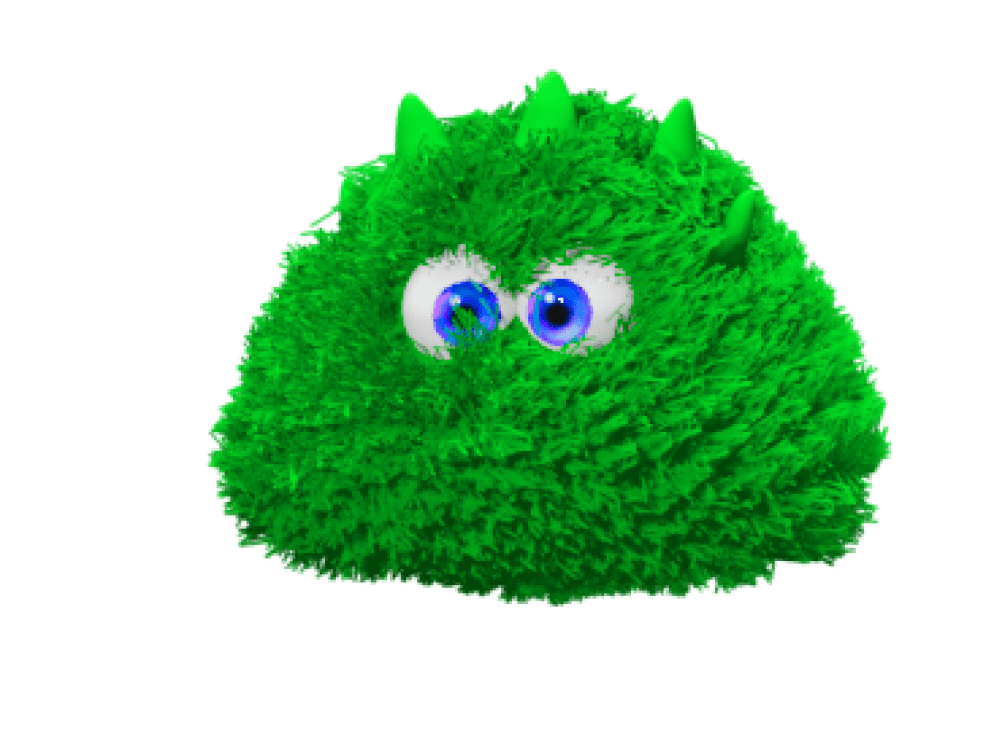
COOKIE
Traits: Bold and impatient; runs straight, bumps into things, then abruptly stops.
Likes: Busy paths, food-like objects, spots where people pass frequently.
Clues: Short straight footprints, red fuzz caught on corners, and “messy” scatter patterns.

BOB
Traits: Slow and steady; stays put for long periods and rarely changes direction.
Likes: Wide open areas, stable ground, calm spaces where it can “settle.”
Clues: Large compressed footprints, flattened fur patches, and clear blocking of the path.
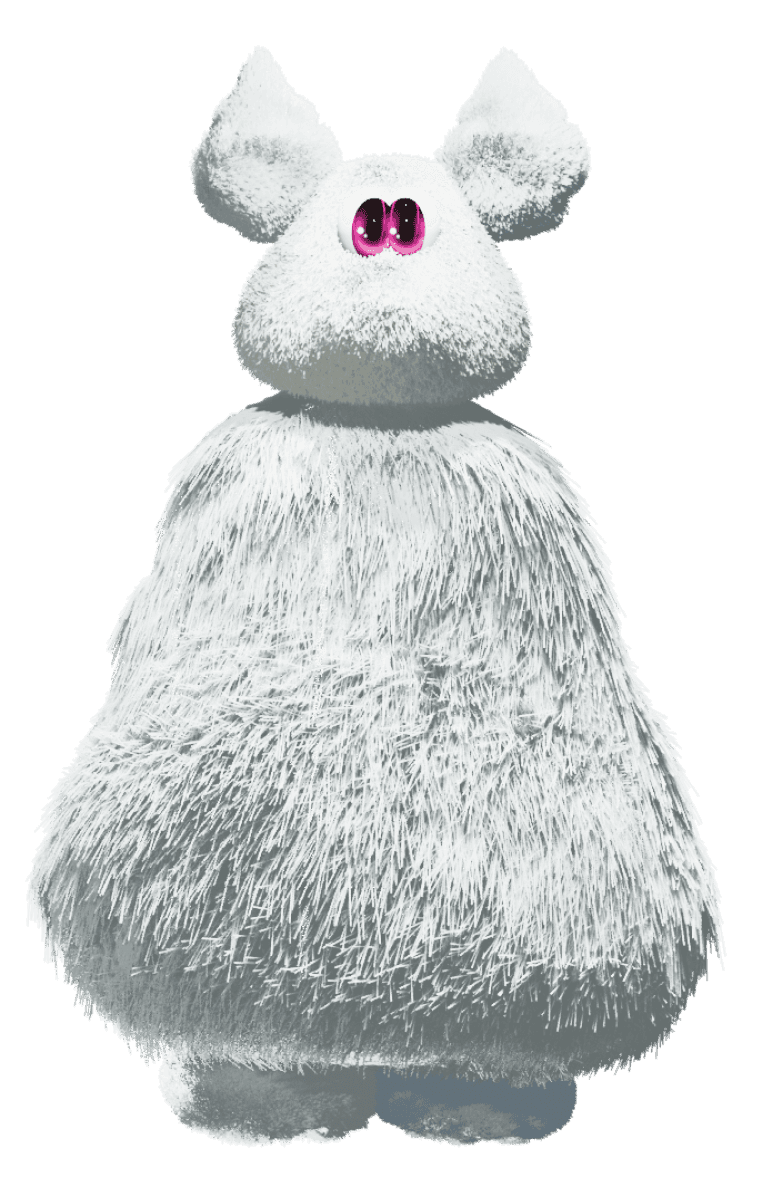
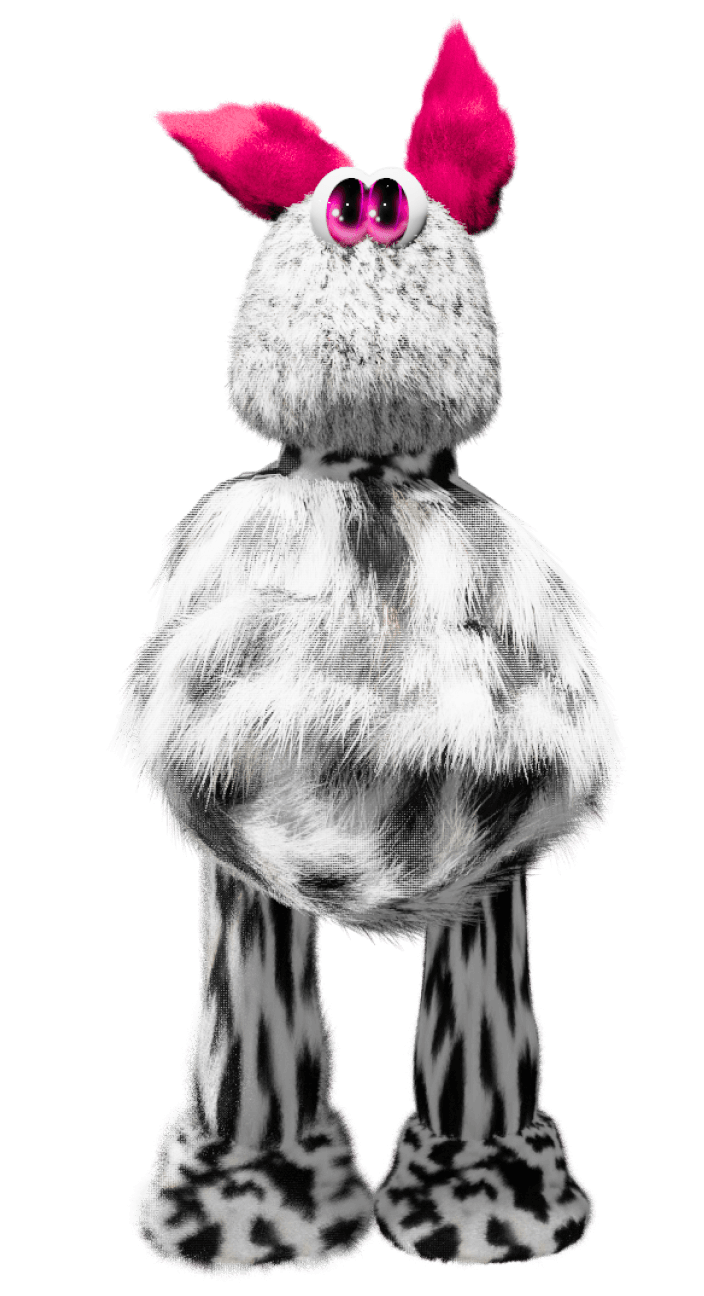
GOOFY
Traits: Playful and unpredictable; pauses to “pose,” then suddenly moves with long steps.
Likes: High-contrast backgrounds, tall objects, places where it can be easily seen.
Clues: Long stride marks, fuzzy black-and-white fibers, and recurring “loop” routes.
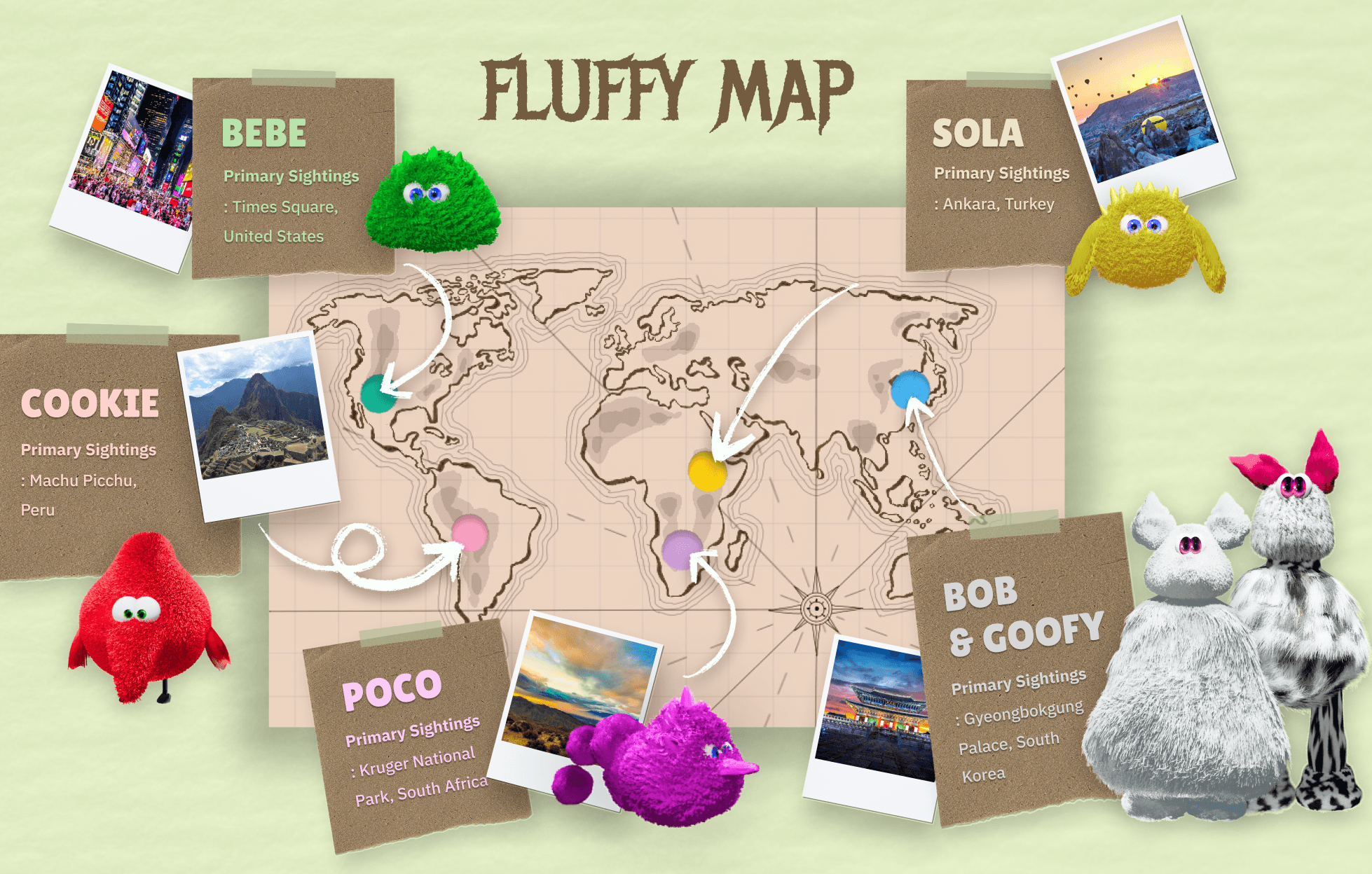
Game map
The Fluffy World Map visualizes key habitats identified through investigations conducted by NOLJA, a fictional international organization focused on global environmental security. Rather than functioning as a simple navigation tool, it supports clue-driven exploration by highlighting regions where behavioral patterns emerge.
Each location acts as both a landmark and an investigation site. Polaroid-style photos and memo-like notes provide contextual clues about the environment and each Fluffy’s behavior, encouraging players to form hypotheses and follow patterns instead of simply traveling between destinations.
05 | Validation
what i learned
01
"Designing Behavior, Not Just Mechanics"
Turning Interaction Loops into Meaningful Action
Through this project, I learned how interaction structures actively shape user behavior. By designing a loop that requires observation before action, I saw how small constraints can shift players from impulsive interaction to intentional engagement. This reinforced the idea that well-designed systems don’t just support behavior—they guide and teach it.
02
"Translator of Data"
Making the Invisible Visible through Metaphors
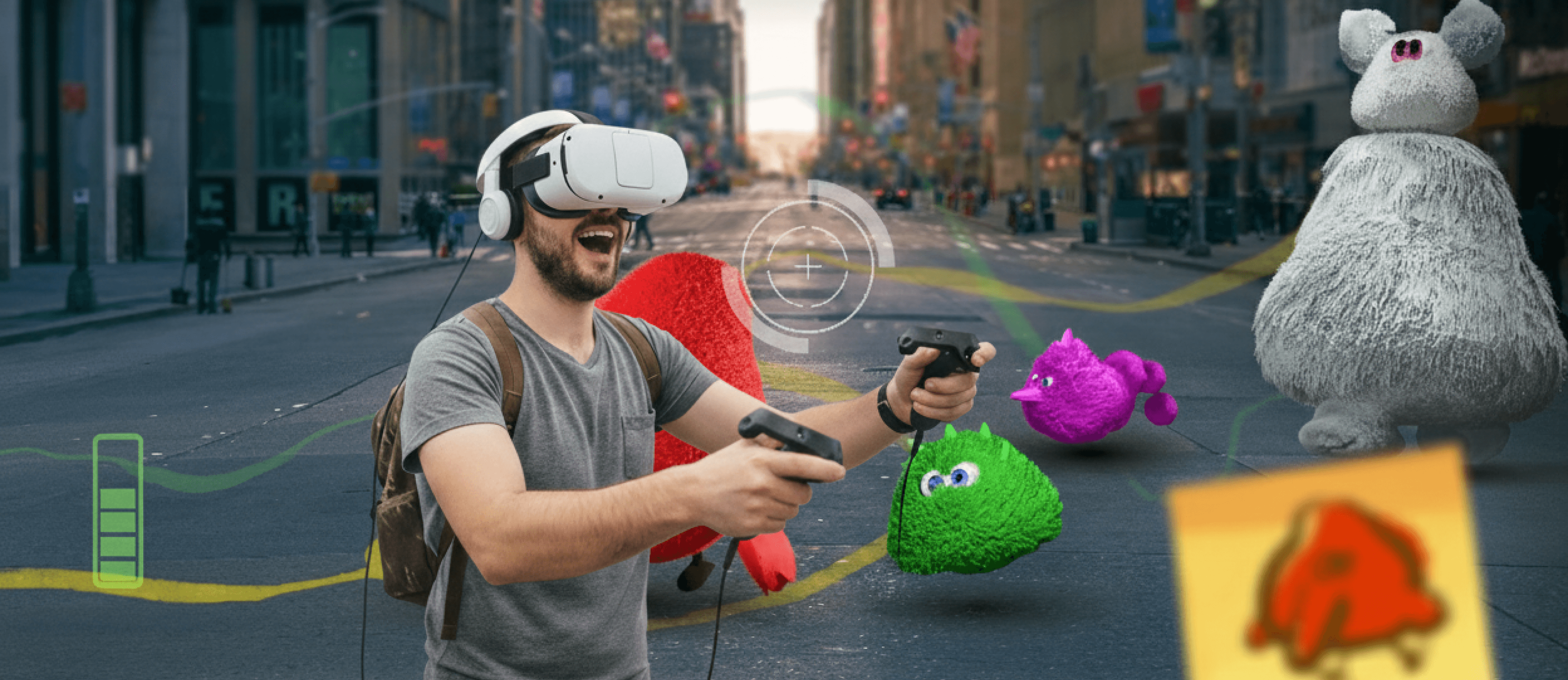
Through repeated in-headset testing, I learned to evaluate viewing angles, interaction distance, and UI placement directly in space, becoming more aware of comfort, fatigue, and pacing over time. While the prototype does not resolve all ergonomic challenges, it clarified the need for deeper comfort research and longer playtesting, shaping how I approach immersive design moving forward.