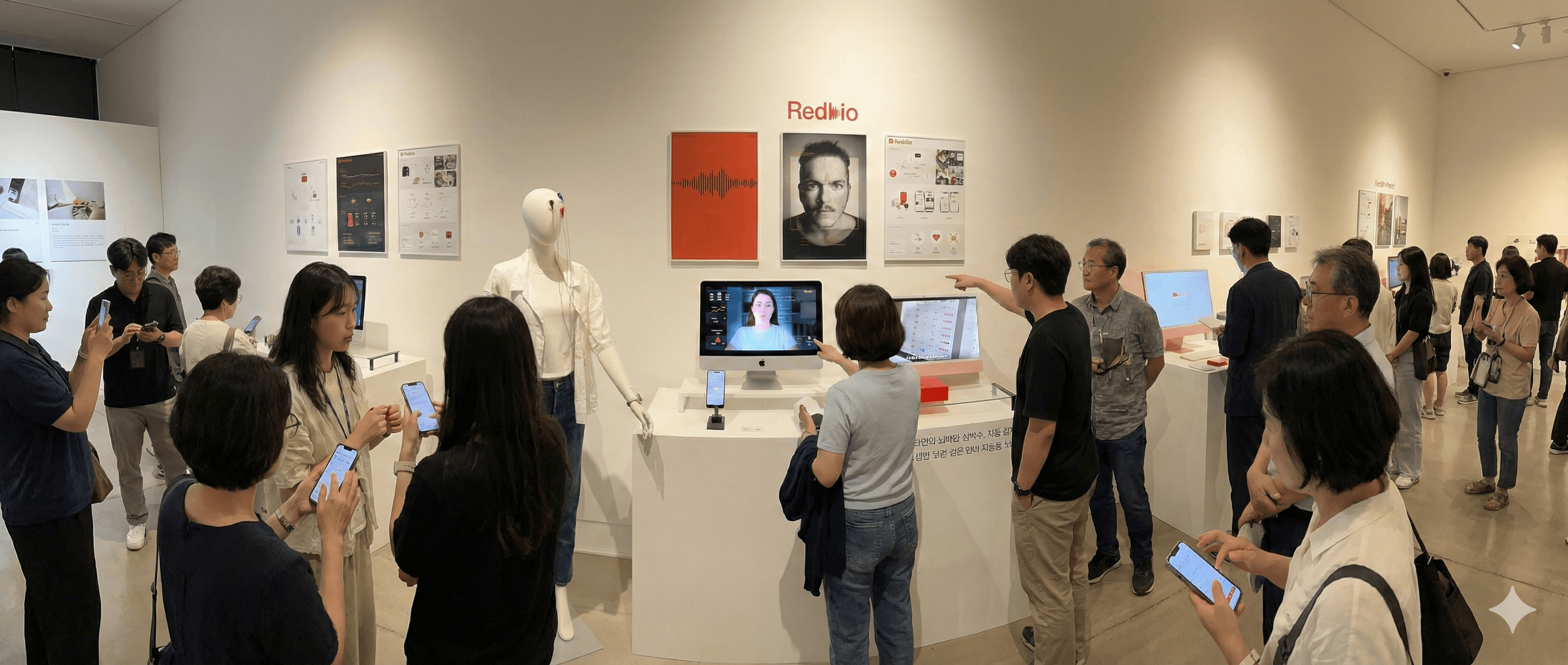
Cognitive State-Aware Adaptive Learning Interface
Redbio is a concept learning platform that adapts in real time to a learner’s cognitive and physical state. Using biometric signals such as brainwave activity and heart rate, the system adjusts content pacing, difficulty, and interaction style to support sustained focus and healthier learning habits.
My role focused on translating biometric data into actionable learning experiences—designing adaptive flows, personalization logic, and interfaces that respond to learner engagement and stress in real time.
MY ROLE
Lead UX Designer
Skills
Information Architecture, User research & testing, Wireframing & prototyping, User Interface Design
Team
Sako Miyako
Timeline
July 2024 - September 2024
01 | overview
Key highlights
Early cognitive screening in South Korea is constrained by fragmented tools, low digital literacy among older adults, and limited awareness of preventive care. Users encounter unclear instructions, inconsistent test reliability cues, and few pathways to continue monitoring after an assessment. These limitations undermine trust and reduce the likelihood of early intervention.
AlzGuard unifies screening, training, and care coordination within a single, streamlined platform. By improving clarity, clinical credibility, and continuity, the redesign enables users and caregivers to manage cognitive health with confidence and ease.
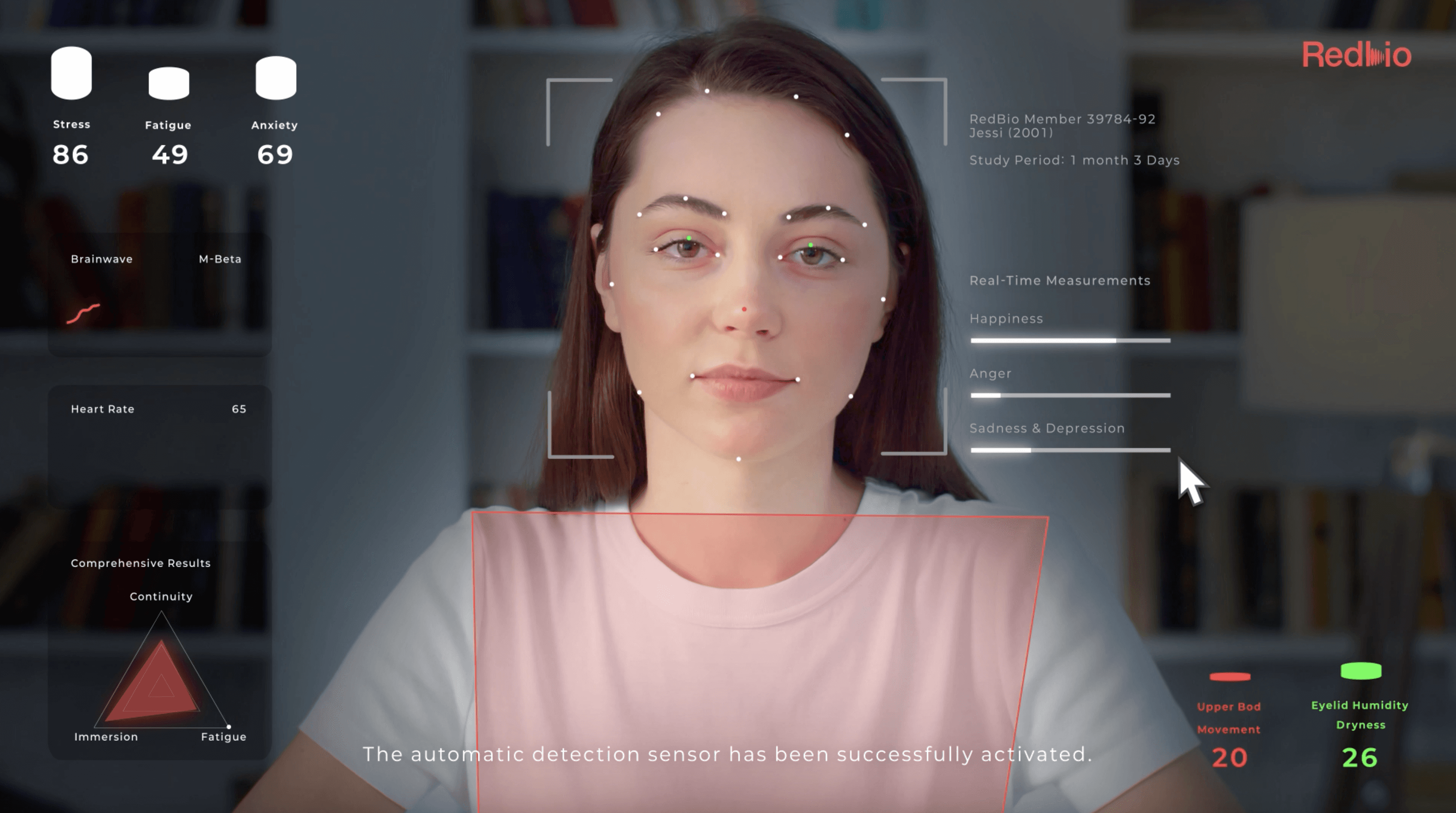
BIOMETRIC SENSING
Automatic Health & Mood Detection
Forget manual inputs. Using advanced computer vision and sensors, the system instantly detects your emotional and physical condition. This invisible calibration sets the perfect difficulty baseline, allowing users to jump straight into learning without any setup fatigue.
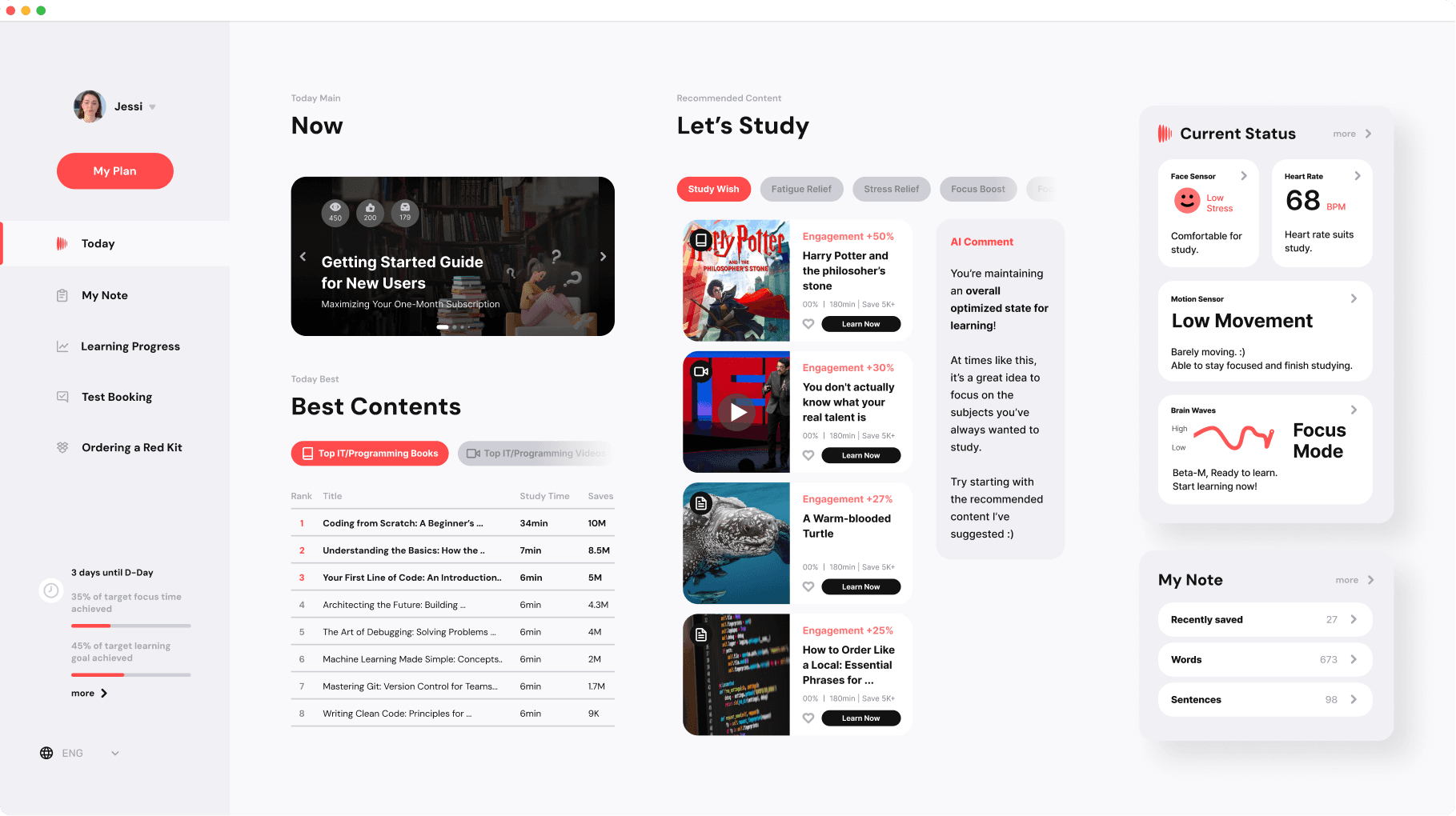
BIOMETRIC SENSING
Curated Content for Now
Redbio removes the guesswork from studying by analyzing your stress and heart rate before you start. It automatically recommends the most suitable content format—whether it’s a light video or an in-depth article—ensuring you always learn in your optimal zone without burnout.
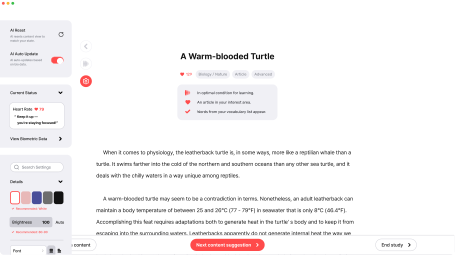
Adaptive Learning Interface
An Interface That Reacts to You
The learning environment is alive. As you study, the UI adjusts in real-time based on your immersion levels. If your focus drops or fatigue rises, the system subtly modifies visuals—like font size or background color—to help you sustain concentration effortlessly.
ANALYTICAL INSIGHTS
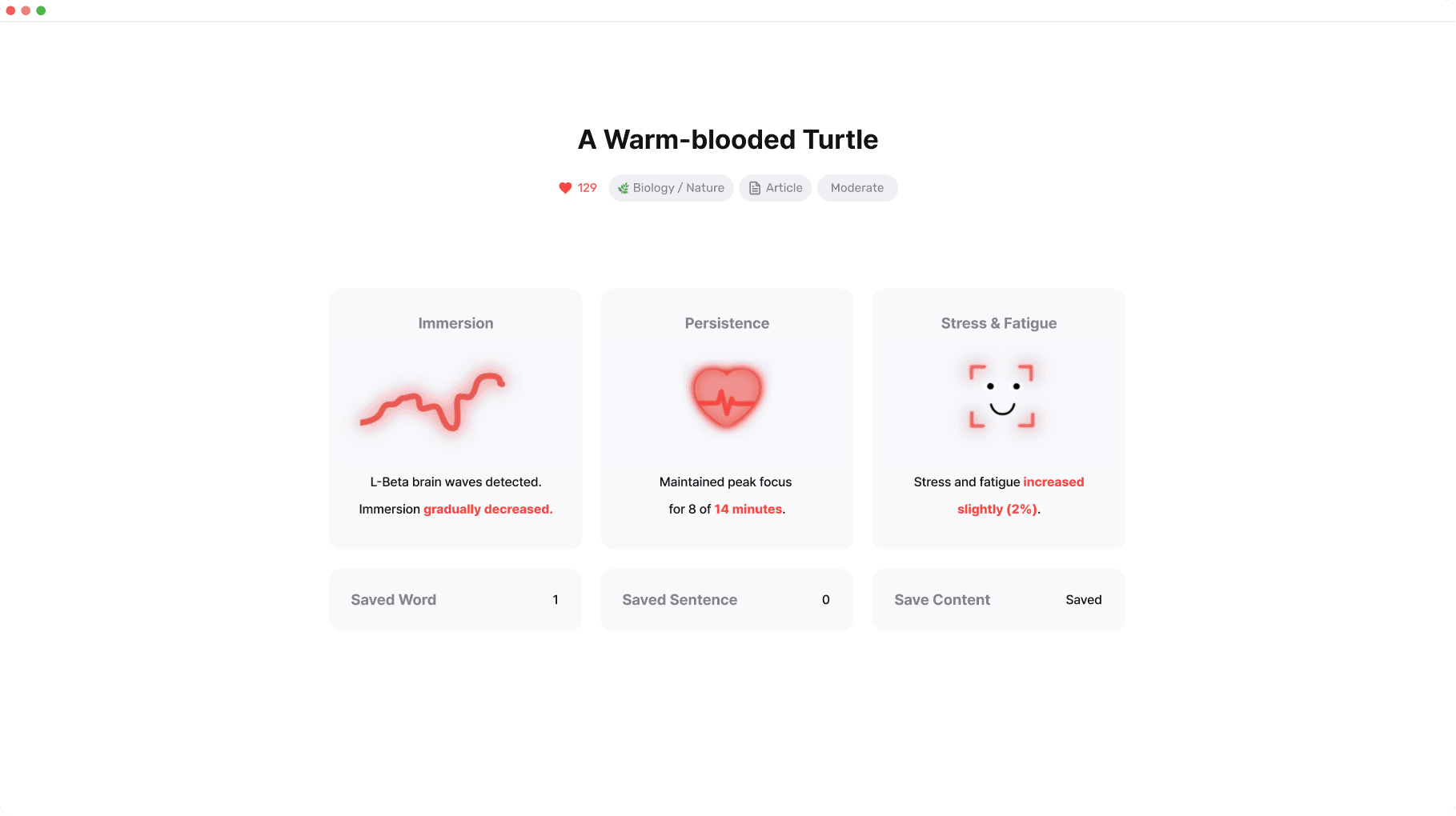
Visualizing Your Cognitive Patterns
Understanding how you learn is just as important as what you learn. The post-session report visualizes invisible metrics like brainwave stability and stress spikes, empowering users to recognize their limits and build healthier, long-term study habits.
02 | research
background
According to 2024 Statistics Korea, private education spending for K–12 students in South Korea reached approximately $22.5B USD (₩29.2T), a 7.7% year-over-year increase despite a declining student population. Participation in private education rose to 80.0%, with students spending an average of 7.6 hours per week in supplementary study. High school students spent the most, averaging $595 USD per month.
In highly competitive regions such as Gangnam and Daechi-dong, this pressure translates into long study hours and sustained cognitive strain. As maintaining focus becomes increasingly difficult, some students turn to ADHD medications such as methylphenidate (Concerta, Ritalin) to artificially extend concentration. These drugs are classified as Schedule II controlled substances and carry significant risks, including dependency and long-term health consequences.
As academic demands continue to rise, students lack safe, sustainable ways to manage focus and cognitive endurance. I envisioned this project to explore how data-driven, non-invasive approaches could better support learning in high-pressure environments.
Problem
goal
High-Pressure Learning Environment
Students face constant performance pressure, leading to burnout, anxiety, and reduced long-term engagement.
Biometric-Driven Personalization
Adapt learning pace and difficulty in real time based on cognitive and physical signals.
Lack of Personalization
Most learning platforms are built for averages, not individuals—ignoring differences in pace, motivation, and mental load.
Interest-Driven Learning
Personalize content, pacing, and feedback based on learner interests, progress, and engagement patterns.
Unsafe Coping Mechanisms
Some students rely on chemical stimulants to maintain focus, increasing dependency and health risks.
Sustainable Focus Support
Replace stimulants with non-invasive, tech-driven focus aids such as adaptive pacing, ambient cues, and stress-aware nudges.
Stress-Induced Study Patterns
Chronic stress reduces focus and reinforces inefficient study habits.
Stress & Mental Load Regulation
Detect overload and recommend breaks, content switching, or calming interventions when needed.
Through initial research, I found that the intense academic pressure is driving students toward unhealthy coping mechanisms, revealing the need for safer, sustainable ways to support their focus and well-being. Reflecting upon this core issue, I started to question:
💭 How should students be supported to sustain focus and manage stress without relying on pharmacological aids?
research methodology
How might we help students sustain focus and manage stress safely—without relying on pharmacological aids?
Existing Service Analysis
Examined how emerging technologies support cognitive enhancement and learning adaptation.
User Interview
Explored study habits, motivation triggers, stress points, and perceptions of focus.
Competitive Analysis
Examined how emerging technologies support cognitive enhancement and learning adaptation.
research HIGHLIGHTS
Existing Service Analysis highlights
As first step into the research, I conducted a survey to understand whether learning effectiveness in online environments is shaped not only by personalization, but also by learners’ physical and cognitive condition and their ability to maintain consistent study habits.
" For every learner on their educational journey "
78 out of 100 learners improve technical skills, self-regulation, and resilience
due to personalized online learning
72 out of 100 learners say their situation or physical condition
impacts their earning
60 out of 100 learners online learning improved their soft skills
60 out of 100 learners struggle with consistent online study
Insight
Learners differ in motivation, energy level, and circumstances—making adaptive learning a necessity rather than a feature.
User interview highlights
As a next step in my research, I conducted user interviews to understand why sustaining focus breaks down over time in online learning, and how learners currently cope with cognitive fatigue and inconsistency.

Seoyeon | 20 | 3 years in foreign language high school in Korea, 2 years at a university in USA
“Visual content helps me stay focused and understand ideas faster than text-based learning.”
Problem
Text- and lecture-heavy platforms increase cognitive load and encourage memorization rather than understanding.
Insight
Mixed media (video, visuals, interaction) improves engagement, comprehension, and focus—especially for visual learners.

Chaeyoung | 23 | 1 year as an exchange student
“Learning keeps my focus when it starts from what I’m curious about and gives immediate examples when I’m stuck.”
Problem
Existing learning services are not designed around the learner’s interests or real-life needs, and they don’t give immediate examples and corrections when learners get stuck, so focus drops and progress slows.
Insight
Learning experiences should start from learner curiosity, lower entry barriers with short, accessible content, and offer immediate support that connects learning to real-life practice.
Yeonoh | 22 | 3 years at a science high school for gifted students, 6 months as an exchange student
“Consistency matters most to me, but I want learning to adapt to my focus level and correct my mistakes right away.”
Problem
Existing learning services don’t adapt to a learner’s focus level and rarely turn what learners write or say into immediate feedback and repeat practice, making consistency hard to sustain.
Insight
Learning systems should adapt to focus in real time, provide instant correction, and support lightweight, repeatable practice that makes consistency easier.

Professor Youngkyung Park | Director, Color Design Research Institute at Ewha Womans University
"Instead of treating 'attention as a single number, we should distinguish immersion from simple focus and explore whether it can be inferred with feasible signals, then use that state to personalize learning time and content in a technically realistic way."
Problem
Many learning services talk about personalization, but they lack a realistic technical plan for what signals to measure, how to infer learner state, and how to connect that to the system.
Insight
A learning service should target immersion, acknowledge practical limits of EEG, and combine more feasible signals like heart rate with learning logs to infer state, then recommend content format and timing accordingly.
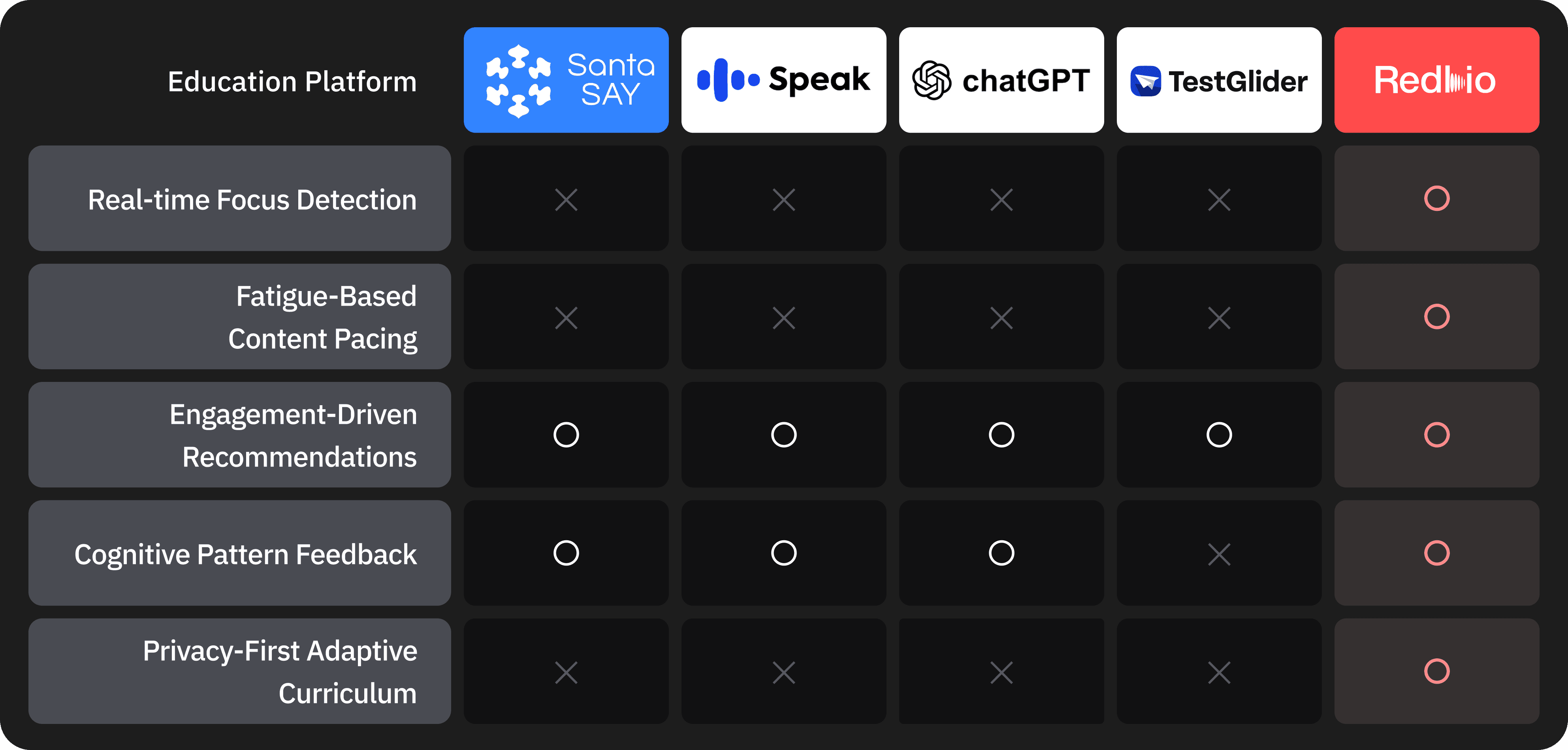
Competitive Analysis Highlights
Existing platforms are not designed around learner interests and fail to provide immediate feedback when learners get stuck.
research summary
Online learning breaks down less from a lack of content and more from mismatches between learners’ fluctuating physical and cognitive states and rigid platform structures.
By listening to users’ frustrations—especially around searching for and choosing courses—I translated these breakdowns into clear design goals, defining what needed to be fixed: adaptive personalization with timely feedback that helps learners sustain focus and consistent study habits over time.
Pain point
Difficulty sustaining consistent learning.
High drop-off due to static content.
Reduced focus from mental fatigue.
Opportunity
Deliver a tailored curriculum.
Curate content using bio-signals.
Adjust pacing in real time.
03 | Define
Insight to Structure
overall project direction
Redbio frames learning as a state-aware experience that supports focus and emotional stability. I structured the concept around a lightweight dashboard for orientation and an adaptive learning flow that reveals bio-data progressively—showing only what is necessary at the moment to reduce cognitive load.
Persona & Journey
Define Users
Map goals and context
User Flow
Structure Flow
Translate insight into steps
Usability Testing
Validate & Refine
Test, learn, and iterate
Next, I translated this direction into a persona and journey, mapped the end-to-end flow, and tested the concept through usability sessions.
persona & journey map development
Based on the research insights, I developed a persona and journey map to map out key moments in the learning flow—particularly where learners lose focus and need support.

Ethan
16 years old
High school student
Boston
Ethan is a high school student preparing for science-related courses who struggles to maintain focus during long study sessions. Despite consistent effort, he lacks visibility into how his focus and study habits affect performance, making it difficult to study efficiently and consistently.
Phase
of
journey
Studying with Frustration
Discovering Redbio
Understanding & Adjusting
Reinforced & Sustainable Learning
Actions
Studies with familiar methods
Questions why studying feels inefficient
Searches for better study methods
Encounters Redbio as a system that analyzes study patterns
Studies with Redbio tracking
Learning contents adjust based on analysis
Receives in-system guidanced
Continues studying with adjusted pacing and structure
Learns more efficiently without pushing through fatigue
Emotions & Thoughts
“I’m studying a lot, but it feels inefficient and exhausting.”

“Maybe the problem isn’t effort—maybe I need to see what’s happening.”
“This feels like it’s teaching me in a way that fits how I’m learning now.”

“Studying feels more manageable when it adapts to me.”

Touchpoint
Study environment
Learning materials
Redbio overview
Study-with-tracking setup
Adaptive learning experience
Pattern-based guidance
Ongoing adaptive learning
Progress over time
user flow
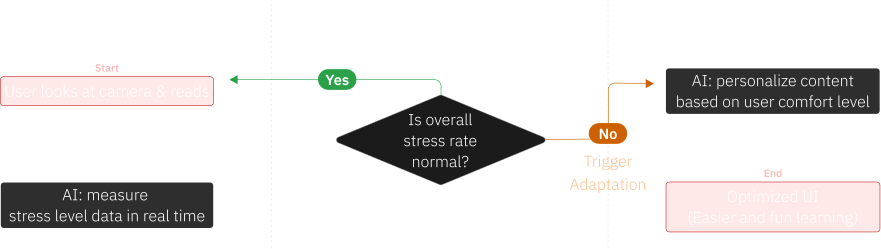
Based on research findings, I defined Redbio’s solution and iteratively refined the user interaction logic by repeatedly validating technical feasibility with a biosignals expert.
Usability testing
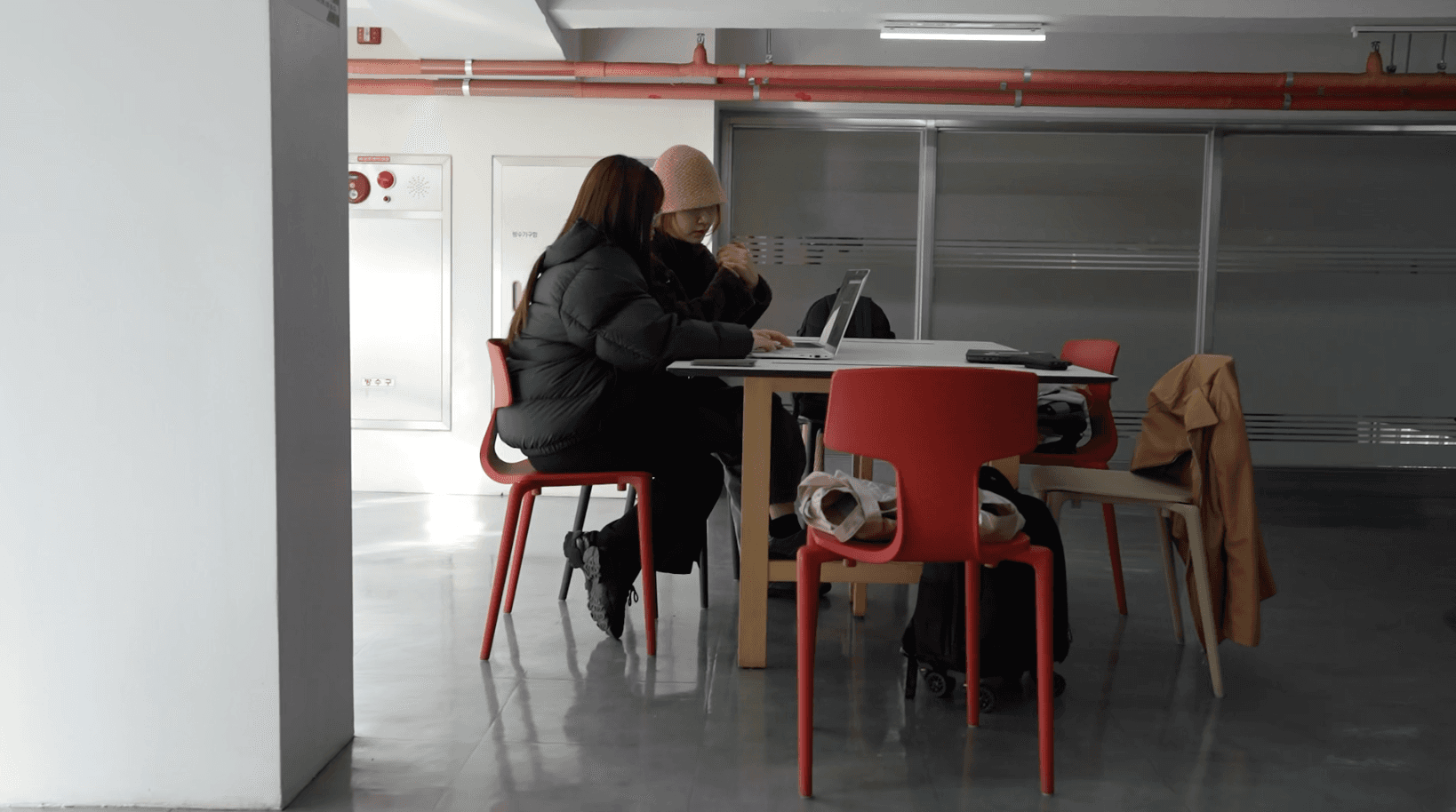
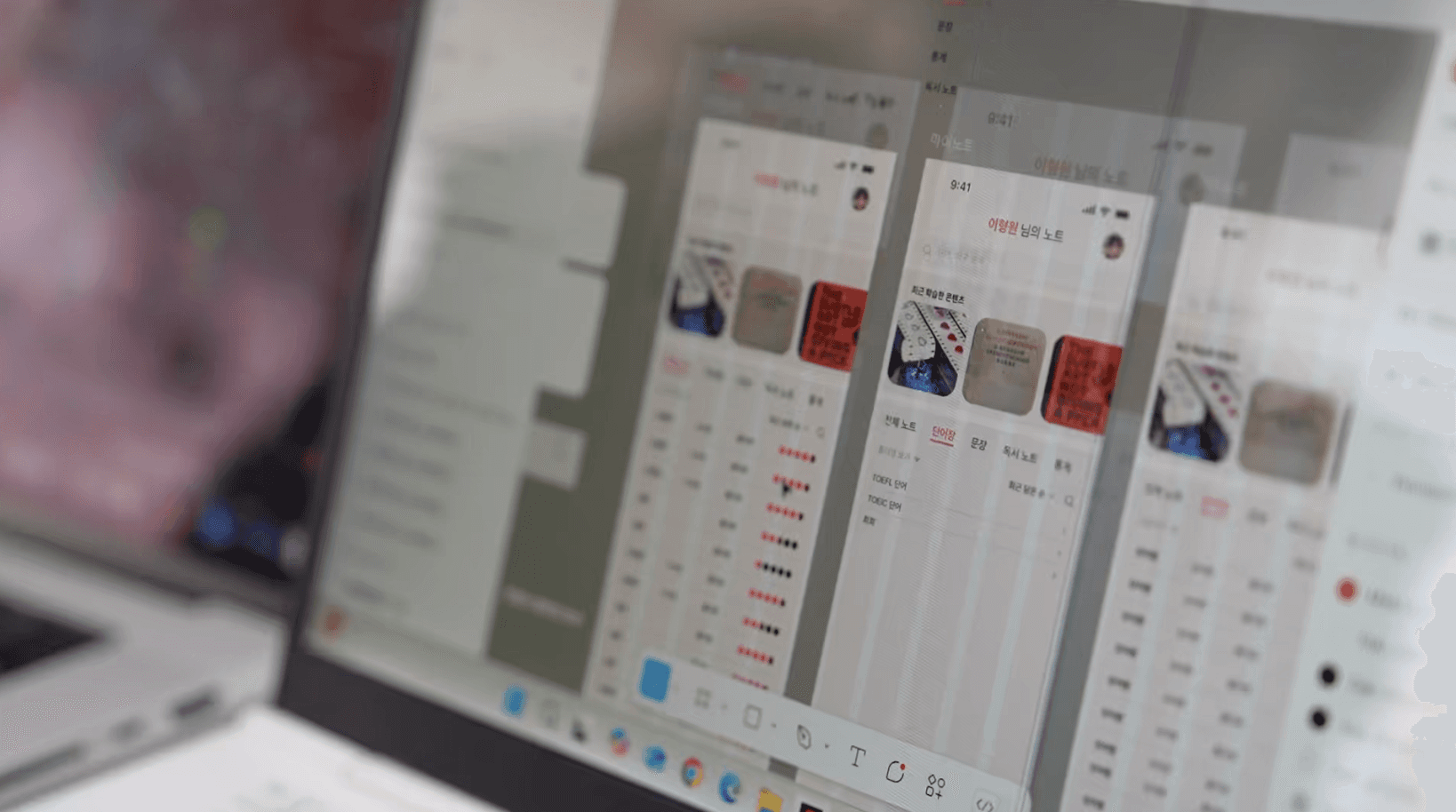
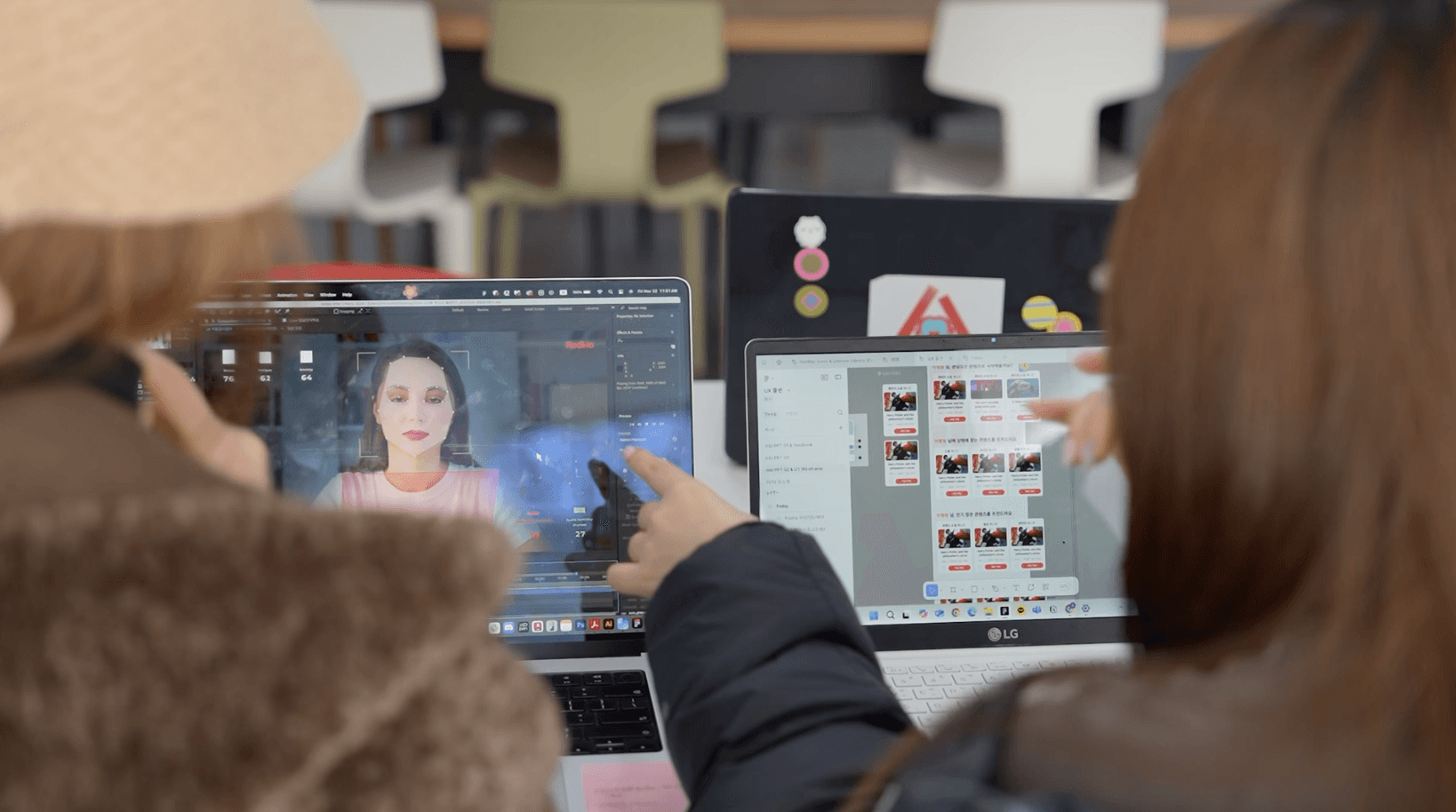
To validate the learning experience for our primary target audience, we conducted moderated usability tests with five university students aged 20–25. Each 20–30 minute session evaluated the end-to-end flow from onboarding to the adaptive learning phase and examined whether real-time bio-data visualization supported or disrupted learning immersion.
Usability Test Objectives
Validate target fit for university students.
Evaluate the end-to-end flow
(onboarding → adaptive learning).Identify UI elements that distract concentration during learning.
Usability Test Target & Duration
5 participants (university students, 20–25), 20–30 min each
Feedback Focus
Gather post-use qualitative feedback on bio-data visualization, its impact on concentration, and dashboard/layout preferences.
Testing Scope
Conduct an end-to-end walkthrough of the adaptive learning flow and a short post-task interview on data visibility and learning immersion.
Insight
Users wanted to track their status, but real-time bio-data fluctuations distracted them during learning. We moved detailed live metrics to a secondary hamburger menu and adopted a summary-style dashboard to balance focus and information.
03 | solution
SYSTEM MECHANISM
The system operates in a three-step loop: it retrieves the learner's real-time biometric data, analyzes it to gauge cognitive states such as immersion and fatigue, and recommends adaptive content to optimize learning efficiency.
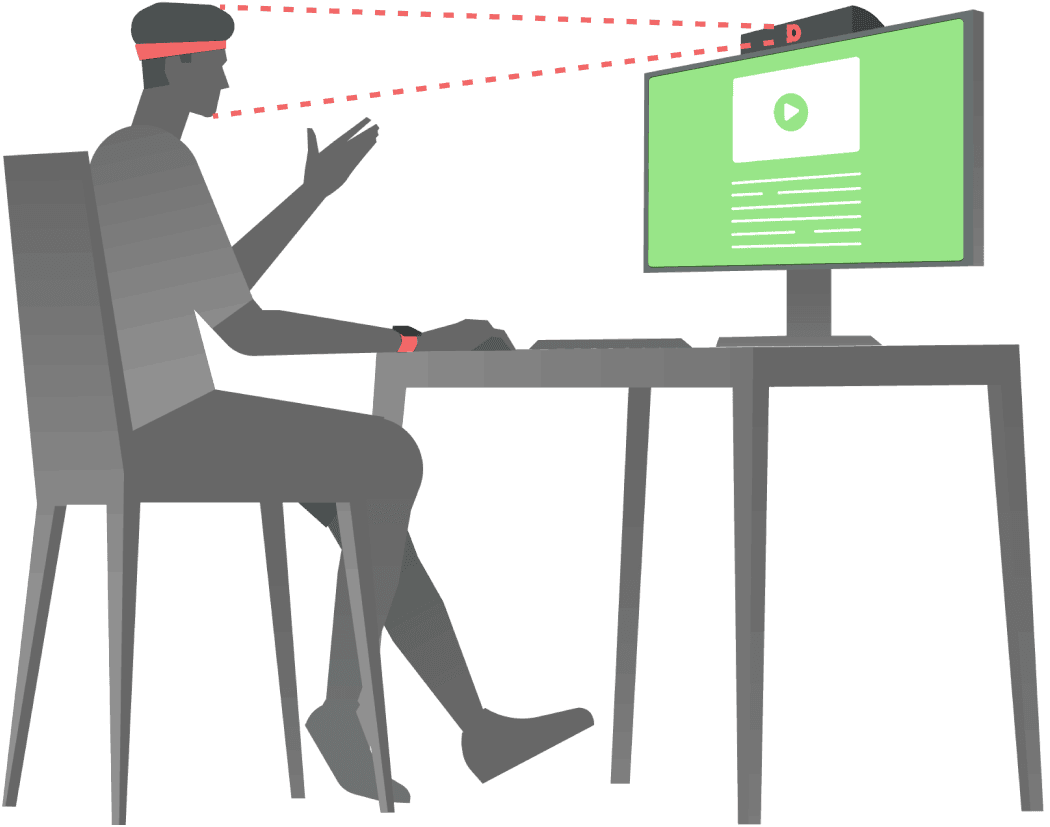
Step 1 Data Acquisition
Retrieving real-time biometric data
during learning
Step 2 State Analysis
Measuring immersion, persistence, and fatigue levels
Step 3 Adaptive Intervention
Recommending personalized content for efficient learning
Brain Wave
Heartbeat
Face Recognition
Camera

Immersion
Continuity
Tiredness
Redbio Interface
Article
Radio
Video
Mixed Media
Bringing Strategy to Life
Step 1
Navigating Landing Page
Designed to communicate the unique value of biometric-based learning, the landing page visually breaks down the 'All-in-One Package' (EEG sensors & software). The layout builds trust and strategically guides users toward the 'Redbio Test' signup,effectively converting curiosity into active participation.
Step 2
BIOMETRIC SENSOR INTEGRATION
Upon login, the system initiates a non-intrusive calibration using the webcam and sensors. It automatically detects physiological states—such as stress, fatigue, and anxiety—in real-time, eliminating manual input friction and establishing a precise baseline for personalized curriculum management.
Step 3
PERSONALIZED DASHBOARD
The dashboard serves as a personalized starting point by analyzing the user's current condition. It recommends content tailored to real-time biometric data and interests, ensuring users begin their learning journey with the most optimal material for their mental state.
Step 4
ADAPTIVE LEARNING INTERFACE
This interface enables hyper-personalized learning by monitoring bio-signals in real-time. If sensors detect high fatigue or low immersion, the system automatically suggests lower-difficulty content or adjusts the UI, helping users sustain focus without stress.
Step 5
BIOMETRIC PERFORMANCE REVIEW
After the session, the system visualizes the invisible learning process. It provides a comprehensive breakdown of immersion, fatigue, and persistence based on heart rate and brainwave data, offering users actionable insights into their learning efficiency.
Prototype in Motion
A short walkthrough of the prototype in use, highlighting key interactions and how the system responds to user context.
04 | VALIDATION
What i learned
01
"Less is More"
Prioritizing User Goals Over Technology
I initially emphasized EEG and heart-rate sensors, assuming real-time graphs would build trust and signal sophistication. However, usability testing showed that real-time graphs pulled attention away from the primary task.
Reflecting upon feedback, I moved real-time graphs out of the primary interface and introduced a post-session summary to reinforce the idea that effective technology should support the task quietly, without adding cognitive load.

02
"Translator of Data"
Making the Invisible Visible through Metaphors
One of the biggest challenges was visualizing invisible bio-signals—brainwaves and heart rate—in a way users could intuitively understand. When presented with raw numbers and waveforms, participants felt confused about what the data meant for their cognitive state.
Through testing, I found users responded better to familiar metaphors like activity rings and battery indicators. Replacing complex waveforms with intuitive metaphors and color cues reinforced a key lesson for me: UX designers act as translators, turning raw data into insights users can grasp and act on instantly.
03
"From Hypothesis to Validation"
The Power of Evidence-Based Iteration
Redbio combined hardware sensors with a companion app under the constraints of a live graduation exhibition. The goal wasn’t just to build a working system, but one that people could use immediately in a noisy, unfamiliar environment.
Demonstrating the project on-site exposed gaps that wouldn’t appear in a controlled lab setting, particularly around onboarding and first-time use. Refining the flow to be self-explanatory strengthened my ability to make evidence-based decisions and reinforced the importance of validating designs in real-world contexts—not just ideal ones.